
MFA THESIS PROGRESS
PIXEL PERFECT
p5.js
Interactive
Illustrative
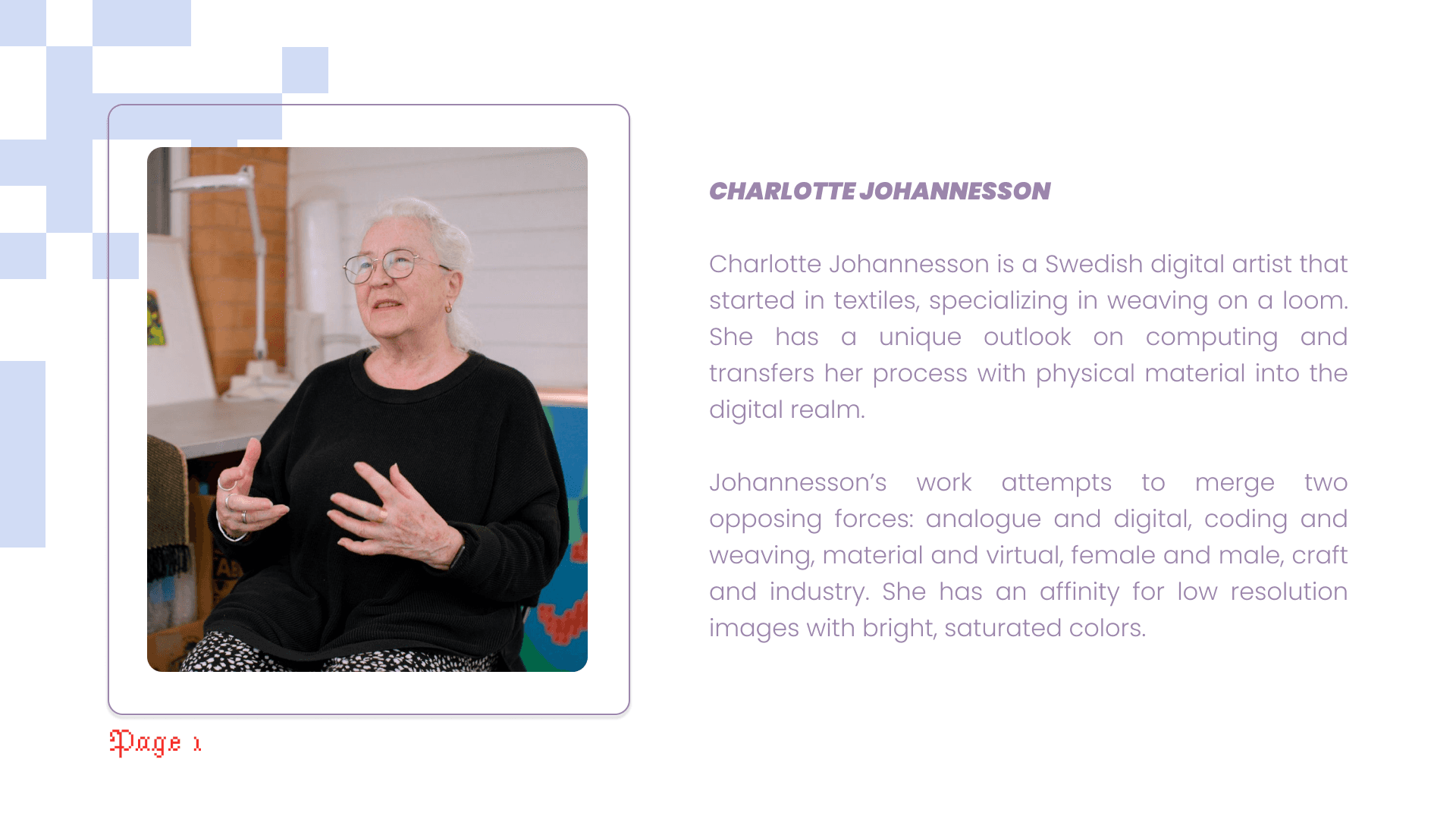

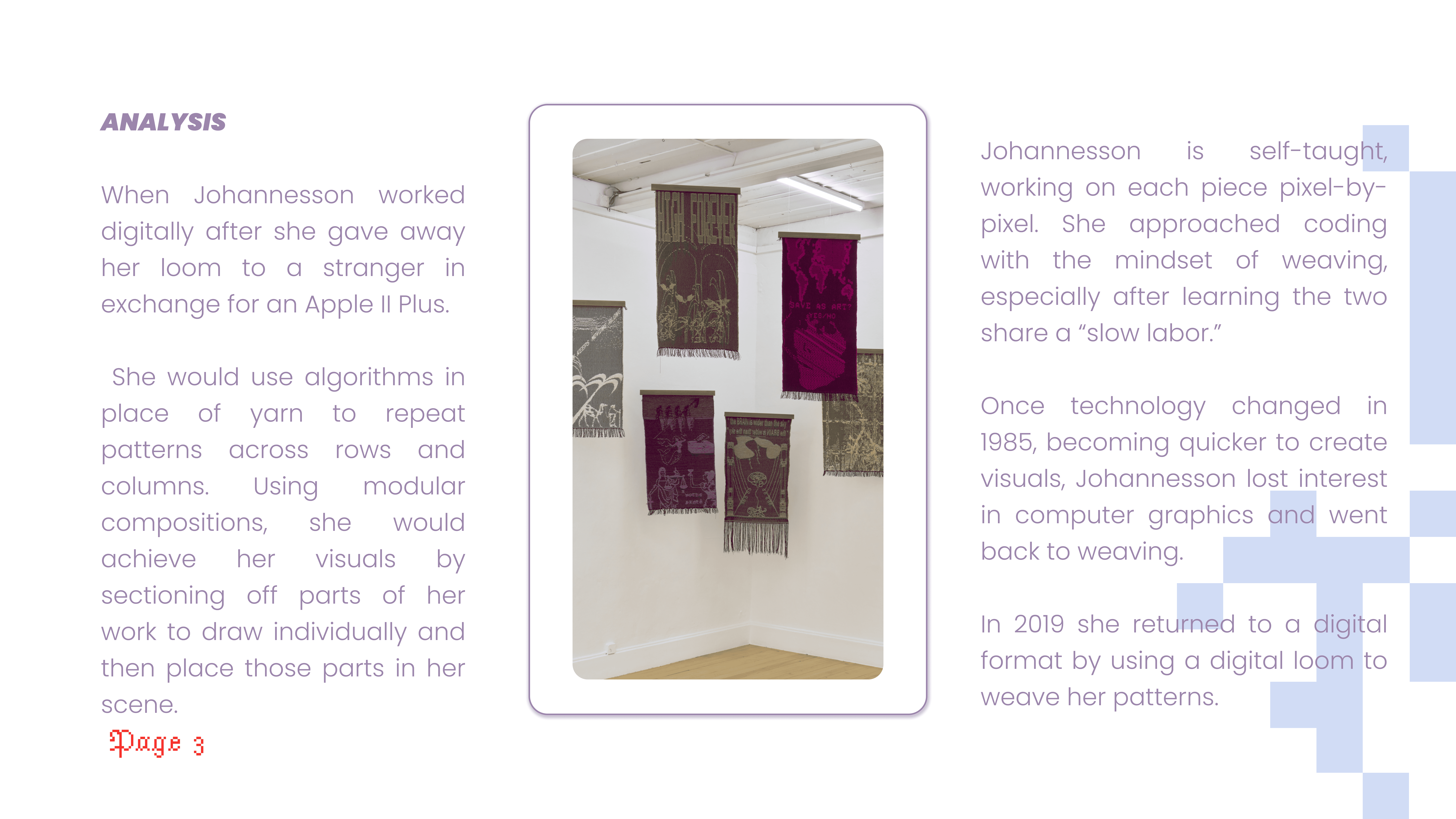

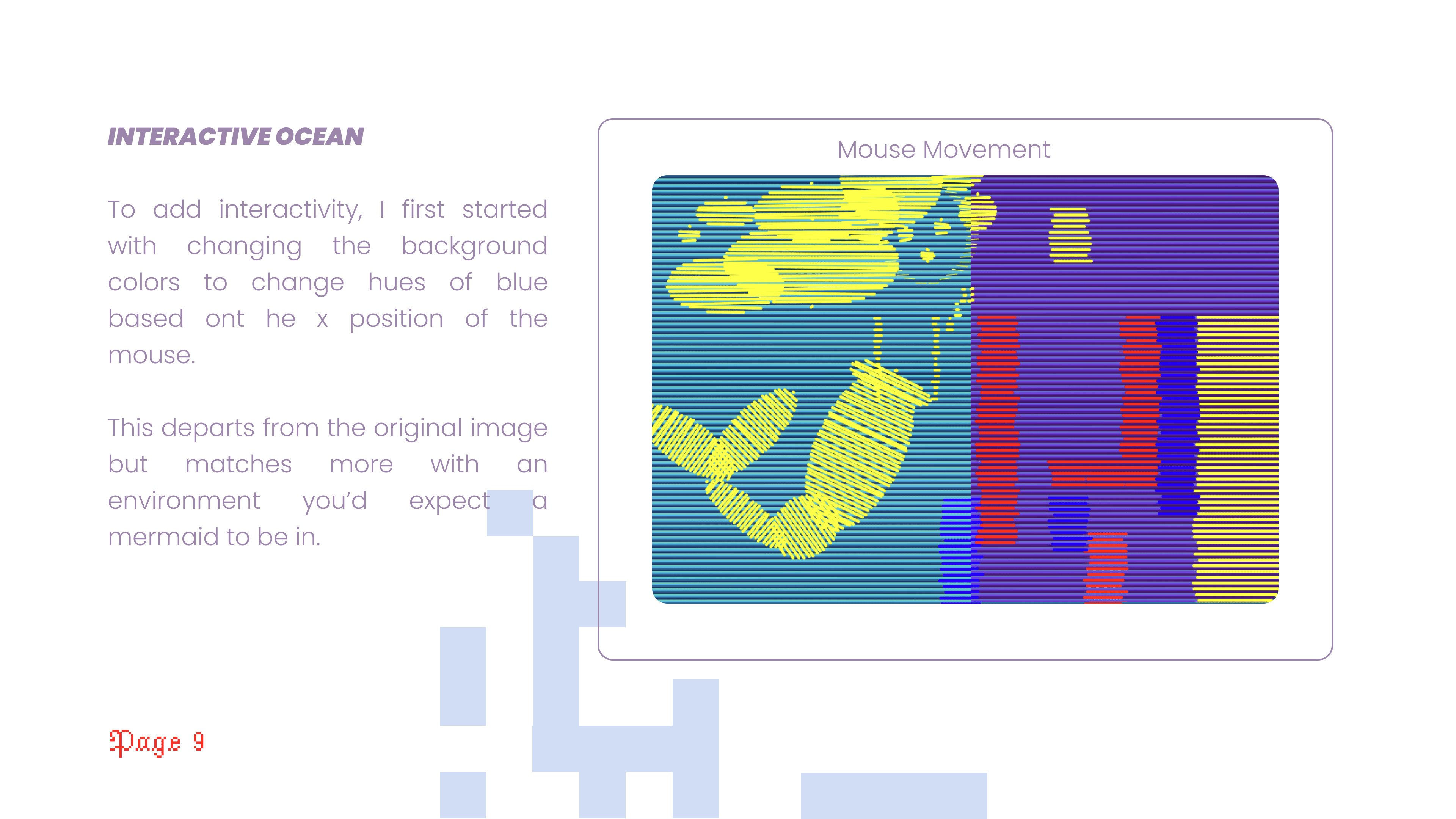
Take an existing piece of digital artwork and first attempt to recreate it in p5.js. Then, add interaction and make it your own.
I choose a work by Swedish digital artist Charlotte Johannesson.
PROJECT GOAL
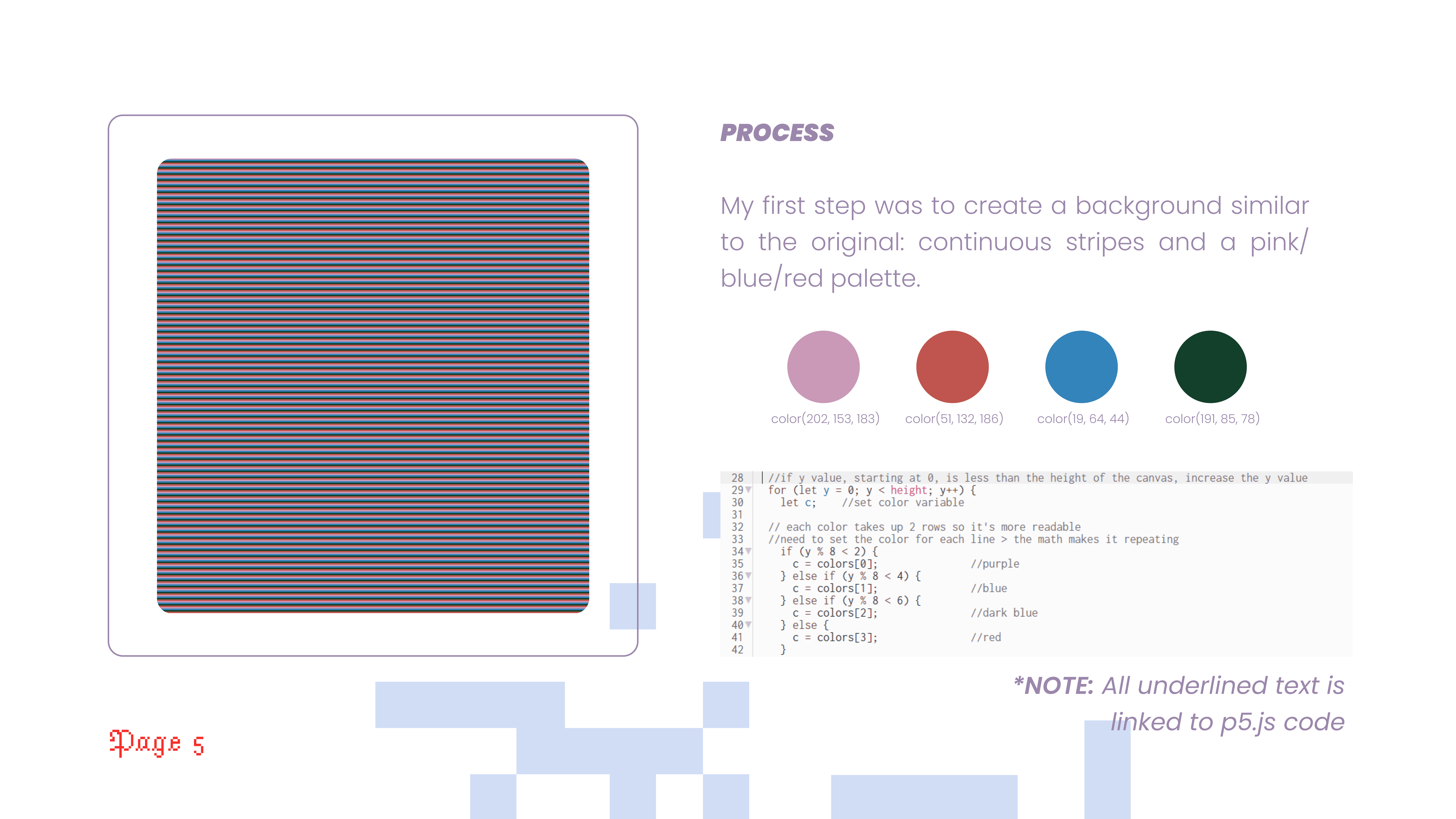
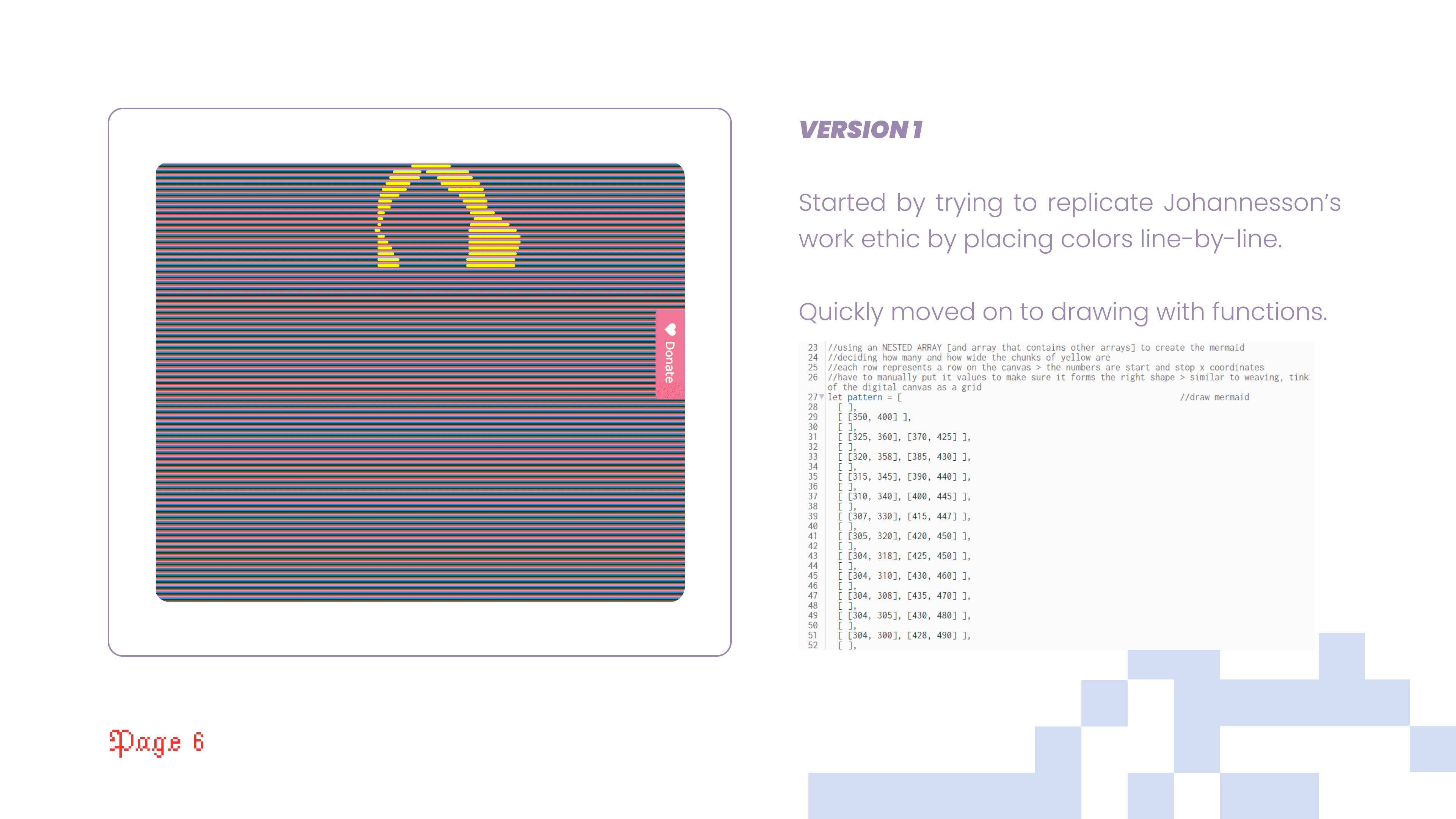
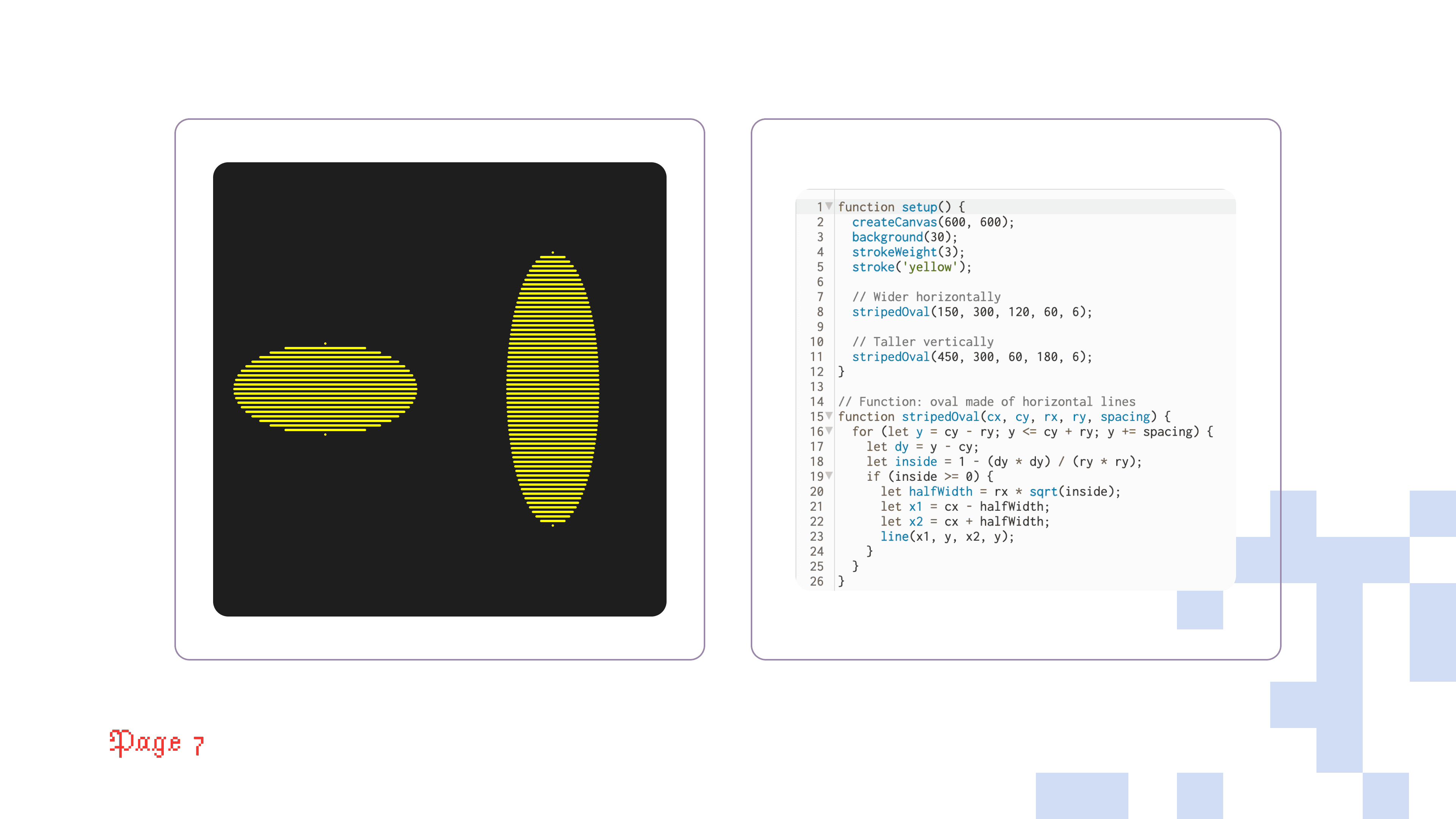
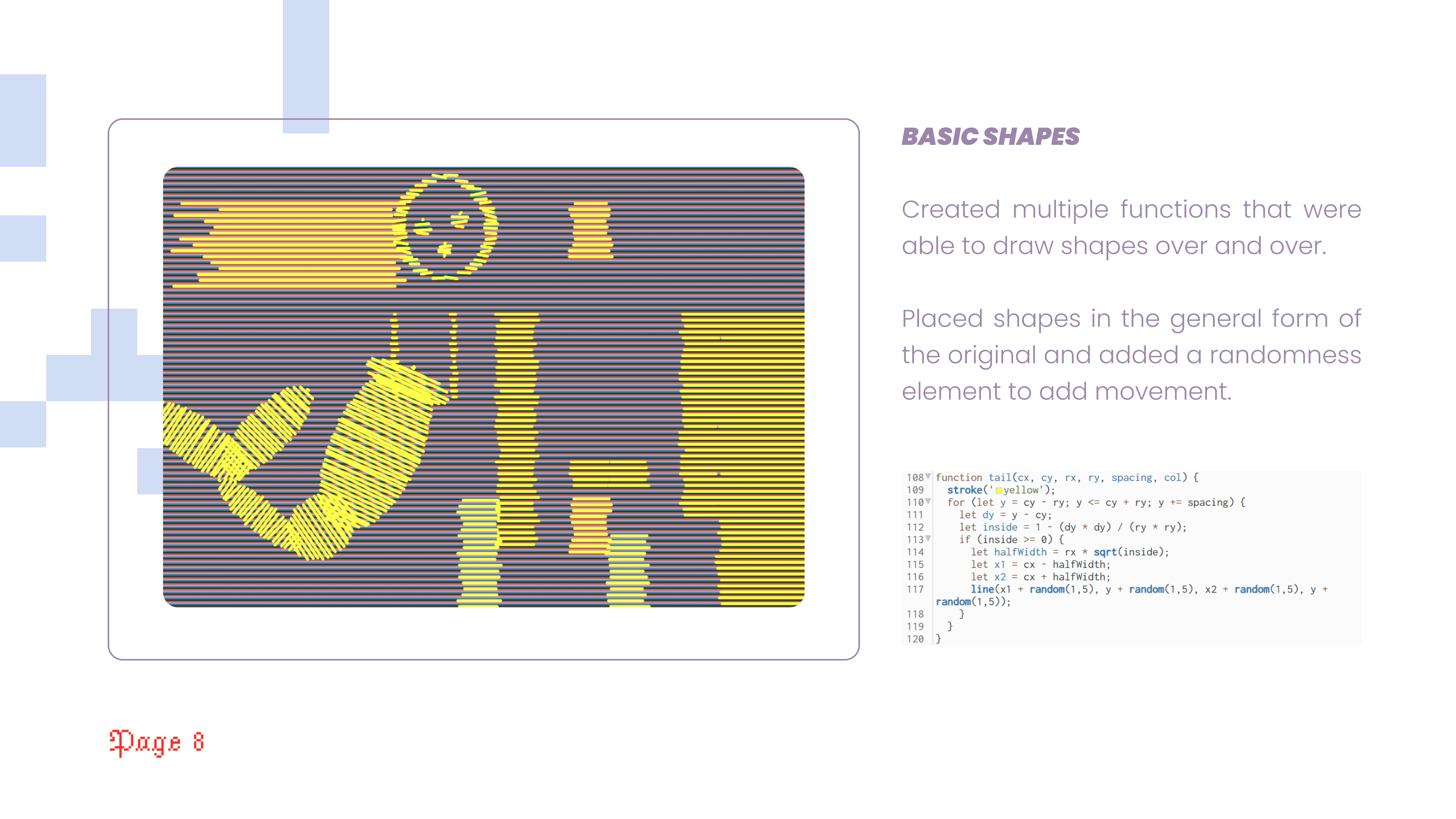
PROCESS
Pixel Perfect went through several iterations before settling on a final product.
FINAL LOOK
PROJECT GOAL
How to take the often invisible bias in AI algorithms and make it apparent.
INTIAL CONCEPT
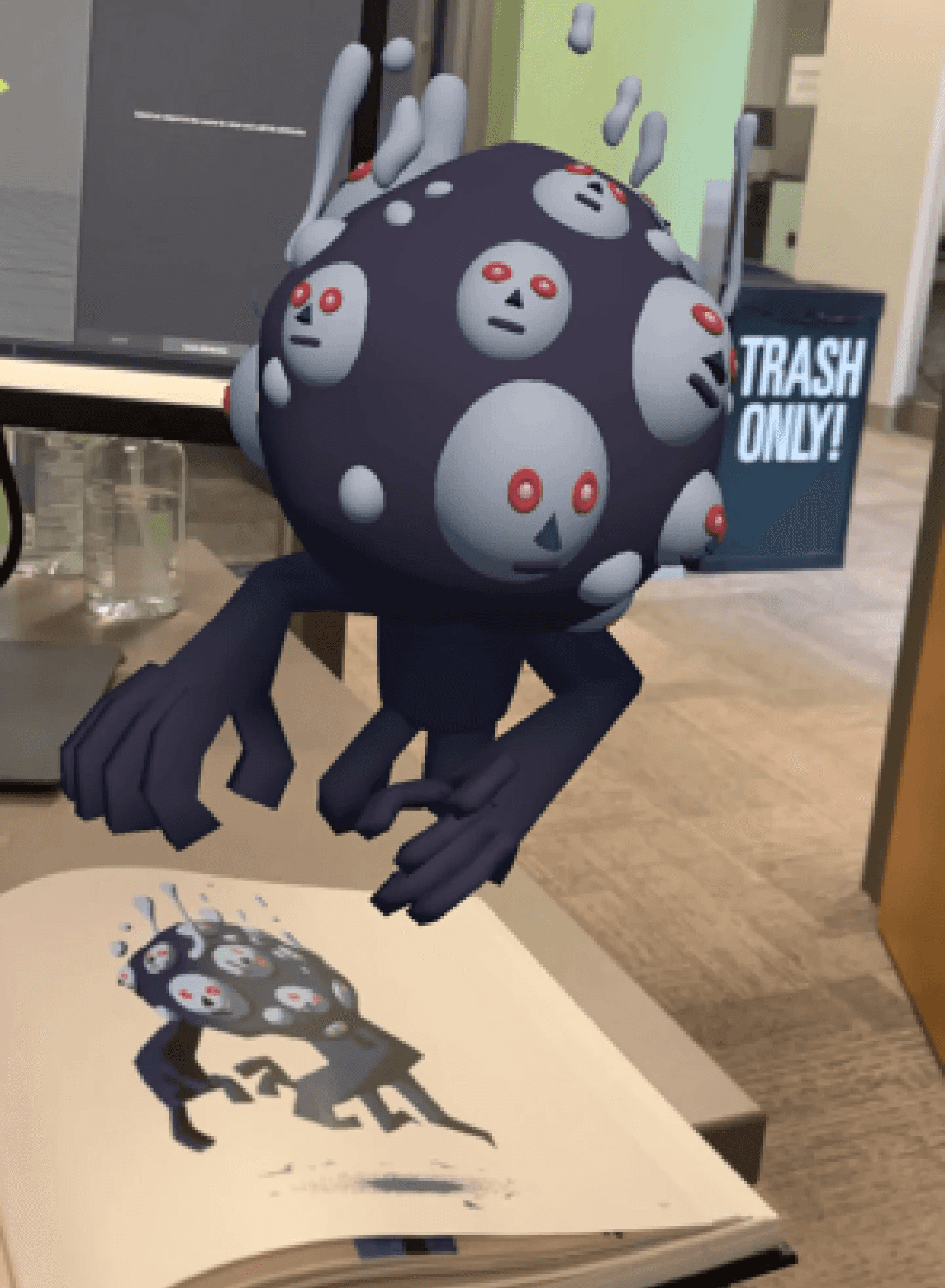
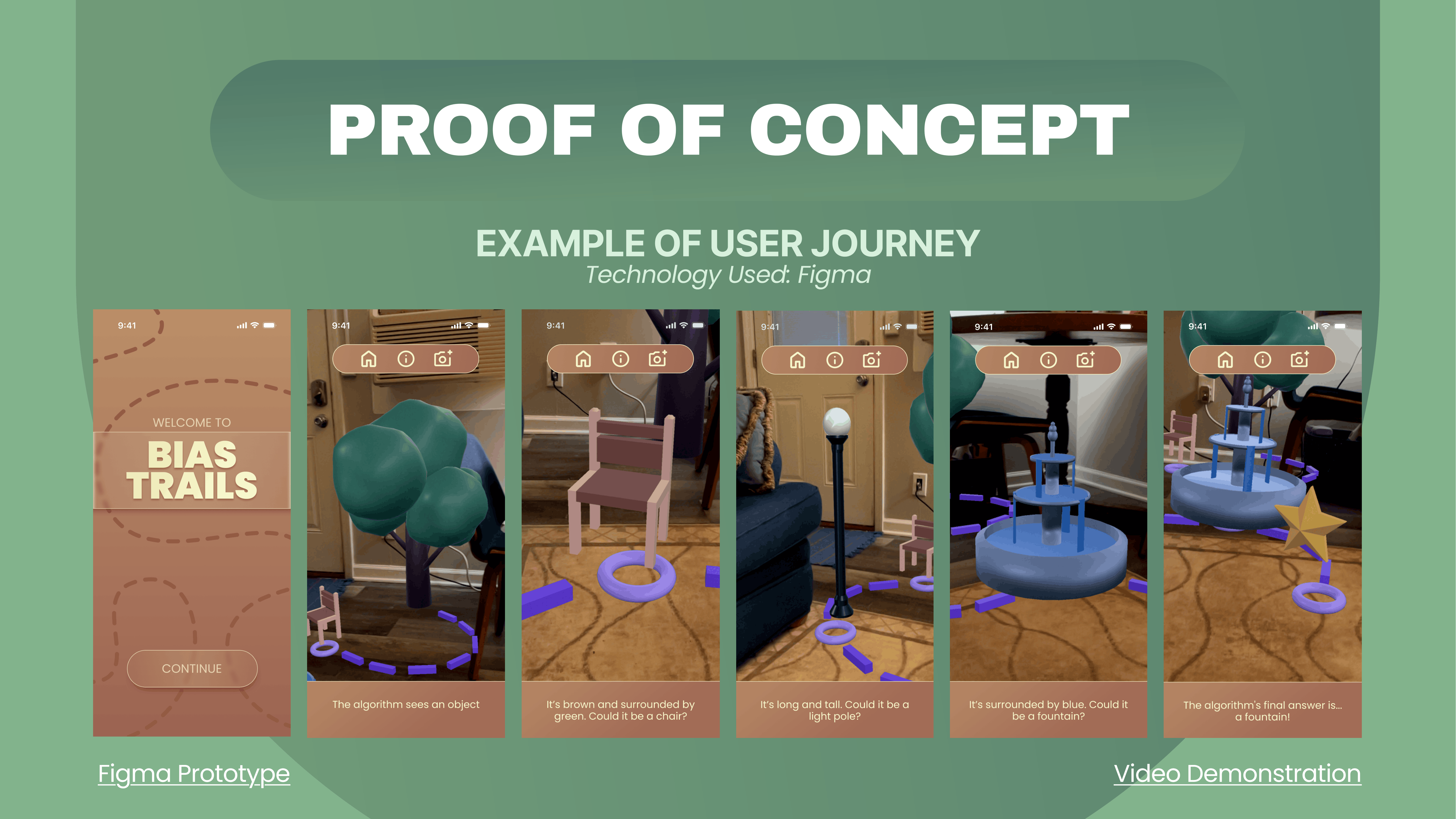
Using AR brings the incorrect information algorithms produce and place them plainly in reality. It also affords more movement from the user to gather information, allowing for them to be "surrounded" by their experience.
I worked with Roger Collins on this project and our concept was to present algorithmic bias as a physical trail that you'd be able to follow. Along the way, you'd uncover the AI's thinking and be able to understand how it came to the incorrect conclusion.
FINAL LOOK
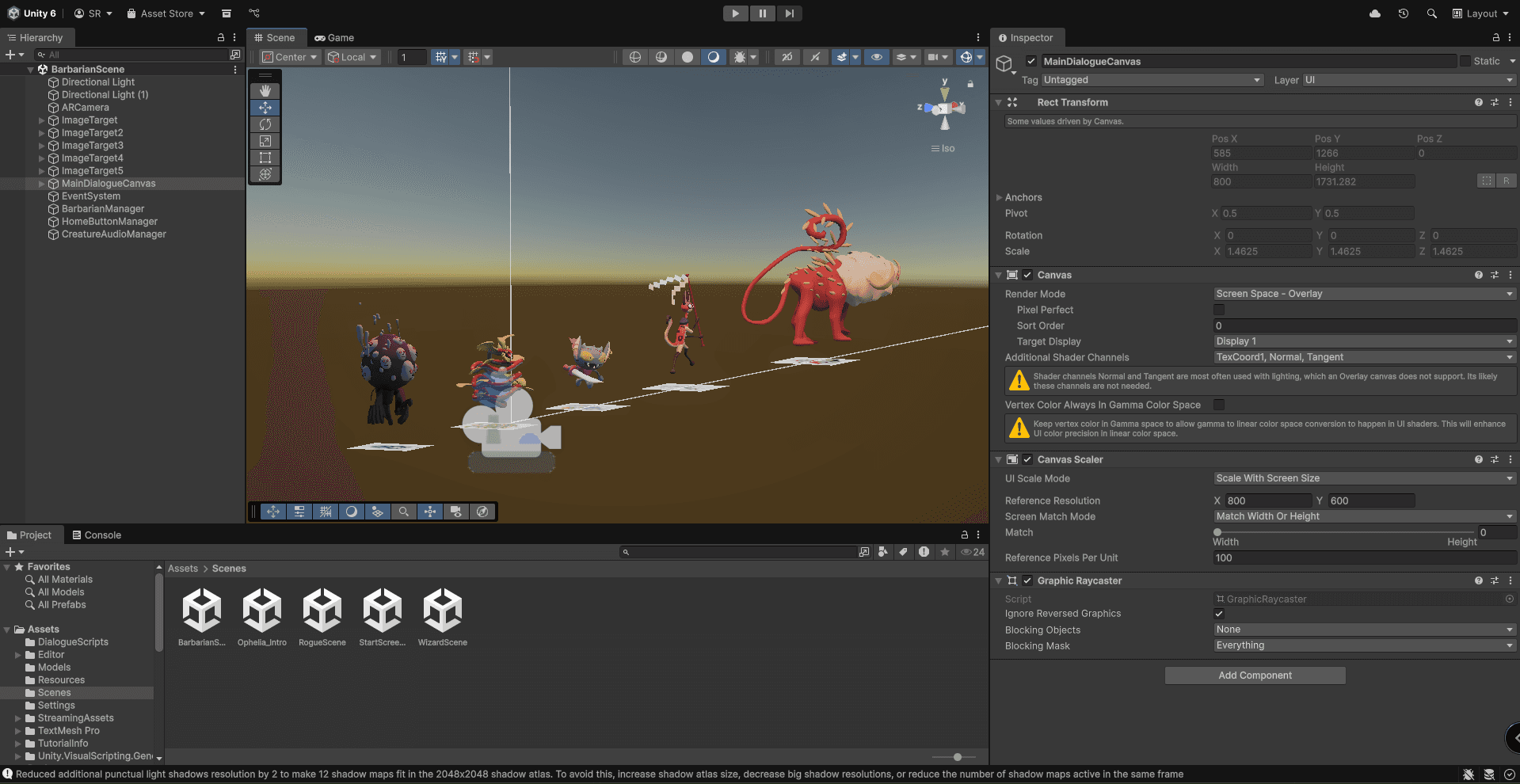
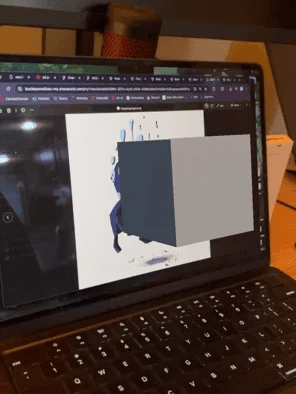
The final product showed the user journey from opening the app to following a trail. The augmented objects were 3D modeled in Maya and a free, web-based software, Web-AR.Studio, was used to prototype how the user may be able to manipulate the trails.
HYPERLINKS
BIAS TRAILS
AR
Educational
Illustrative
RED FLAG!
Databases
Web-Based
Data Visualization
PROJECT GOAL
Take a large database of information and present it in a digestible way.
INTIAL CONCEPT
I worked on this project with Thywill Oluwande and we explored the question: Who decides the quality of online information?
We found a database that indicated whether or not certain posts from various platforms were flagged for misinformation.
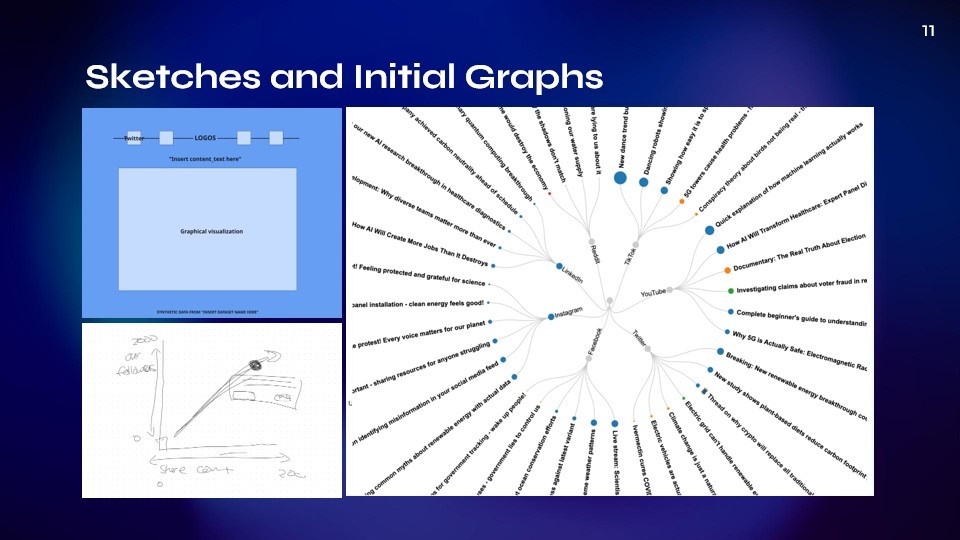
In our initial sketches, we explored how we would go about conveying the relation of flagging content to the social media platform the post originated from.
FINAL LOOK
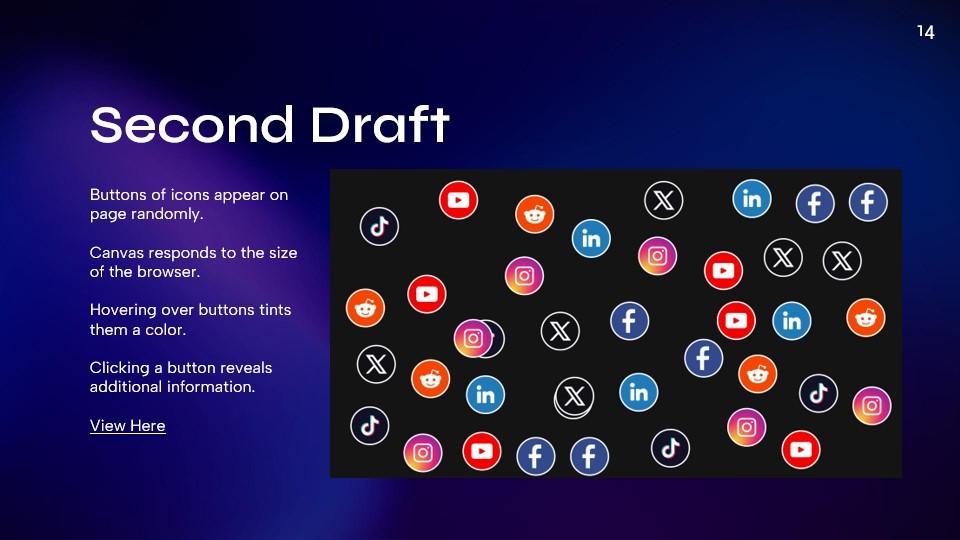
Our final product is a scrolling webpage where social media icons begin in a scattered and messy state. As you scroll, they move into clear categories. Hovering over these icons reveals specific information about a post, including if it was flagged for misinformation.
ITERATIONS
We eventually started to see how showing a platform's icon could draw the eye. This is also where we first begin drafting the idea of starting in chaos and gradually moving towards clarity.
BOOK REVIEW
Games
Analysis
Essay
IS REALITY BROKEN?
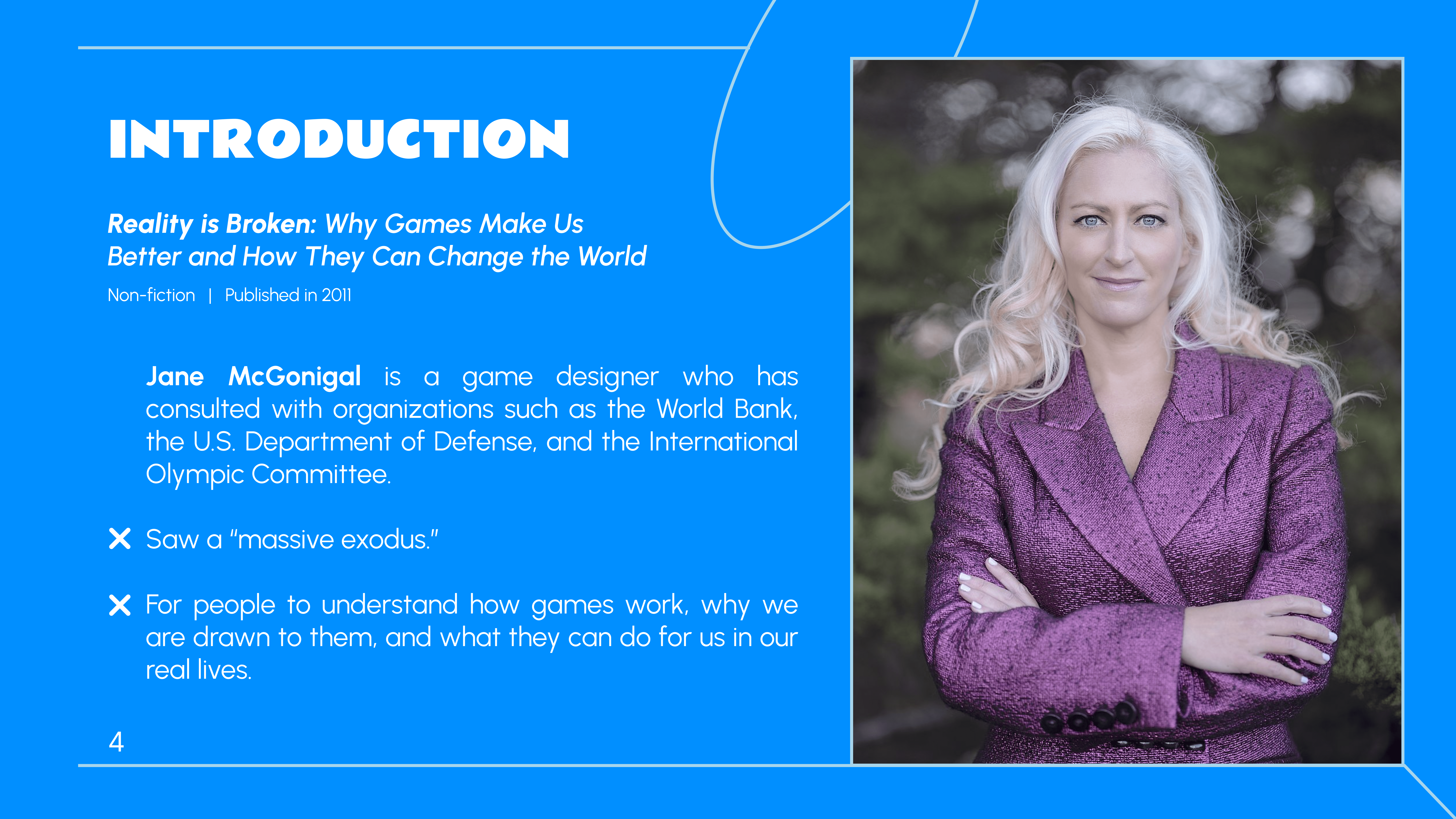
Jane McGonigal, author of Reality is Broken: Why Games Make Us Better and How They Can Change the World, argues the impact games have on our lives through the power of play and psychology can create sweeping systemic change.
500 WORD SYNOPSIS
Reality Is Broken: Why Games Make Us Better and How They Can Change the World is a non-fiction book published in 2011 by Jane McGonigal. It argues that reality is broken compared with games. Games often fulfill human needs that the real world cannot, and can provide easy-to-understand ways of implementing real change. To begin, McGonigal describes people engaging in a "mass exodus" from the real world into games, because of the need to feel fulfilled, purposeful, and engaged. Her main goal is to outline how we can apply game design principles to “fix” this current reality. The book speaks about fourteen fixes on how games are better than reality, and these fourteen points summarize her argument for implementing gamification into the world.
Out of the fourteen fixes expanded upon by McGonigal, six stand out as the most impactful.
Fix 1 - Unnecessary Obstacles: Reality is too easy. Where most people aren’t challenged every day, or need to seek out challenges like going to the gym or joining a social club, games offer challenge that is fun, engaging, and easy to get lost in. Games challenge us with voluntary hard work, where we choose to overcome obstacles and accept that there is a risk of failure. Leveraging how games make us challenge ourselves can help with everyday activities, such as folding laundry or taking out the trash.
Fix 2 - Emotional Activation: Reality is depressing. Games told our attentions for prolonged periods of time. They generate intense emotions like flow and fiero (triumph over adversity), which combat depression. These states are easy to reach through gameplay and when used for good, can help people enjoy their lives more.
Fix 5 - Stronger Social Connectivity: Reality is disconnected. Games build strong social bonds and fight isolation by making social activity easier to maintain. Games can act as a long-distance activity for friends and often allow for short interactions with strangers.
Fix 10 - Happiness Hacks: Reality is hard to swallow. Positive-psychology practices like gratitude or contemplating mortality can be turned into game mechanics. This can help them be easier to adopt and removes barriers that may dissuade people, like embarrassment.
Fix 11 - A Sustainable Engagement Economy: Reality is unsustainable. Game design provides intrinsic rewards that keep an audience captivated for a longer period of time, allowing change to actually occur. An example of this is Wikipedia, a completely crowdsourced project with thousands of pages that constantly updates.
Fix 14 - Massively Multiplayer Foresight: Reality is stuck in the present. Game can harness brainpower from ordinary people to strategize and plan long-term solutions for the future.
Ultimately, McGonigal argues, while reality is flawed, it is our destiny. She wants us to stop viewing games as pure escapism and think of them as a platform to alter the future. Her book aims to give examples for future designers on what designing for the ideal world can be. In the end, Reality is Broken is an optimistic view of the game industry and urges creators to implement gamification and psychology to promote positive behaviors.
Ui in Unreal Engine 5
UI
Menu System
Game Start Screen
PROJECT GOAL
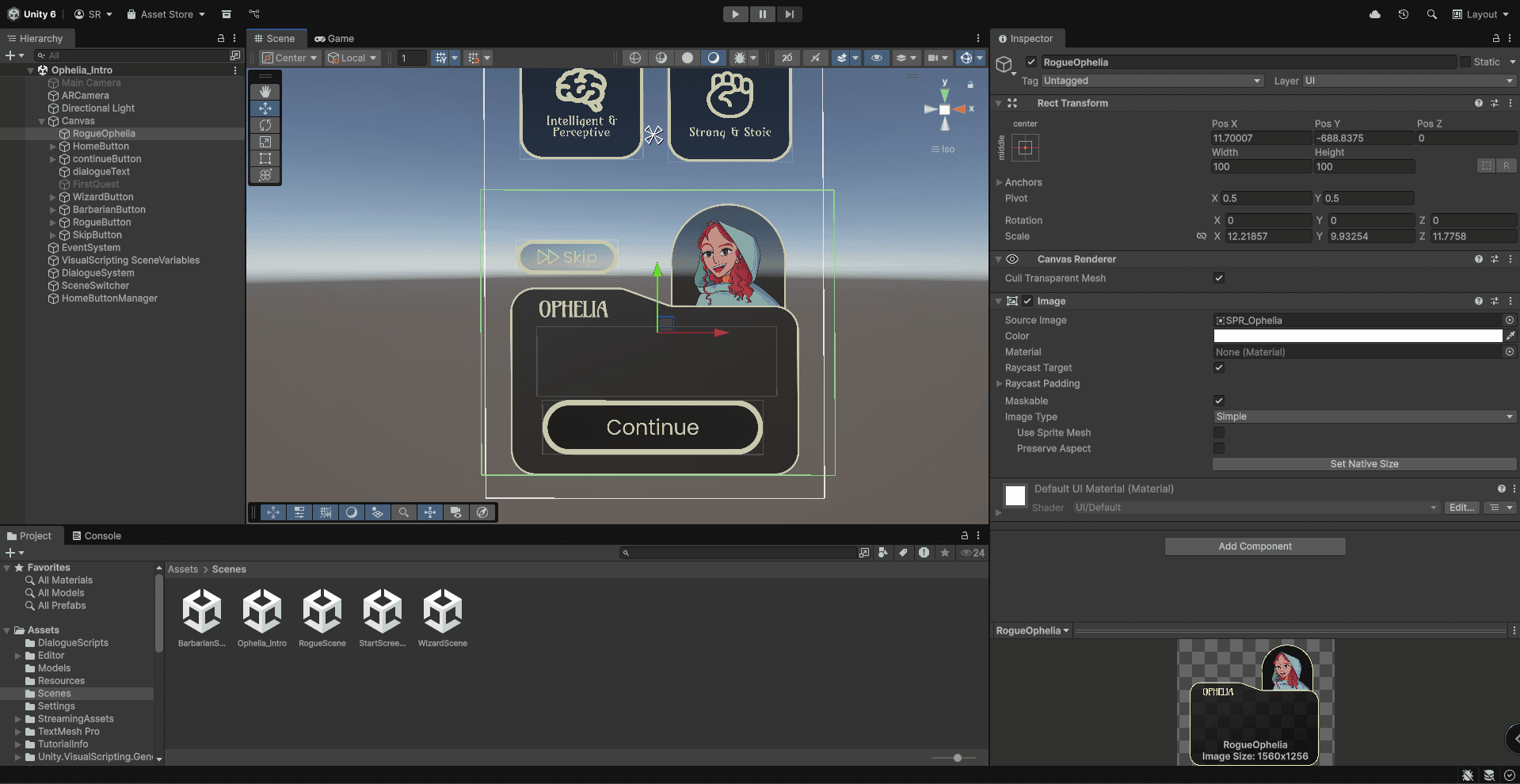
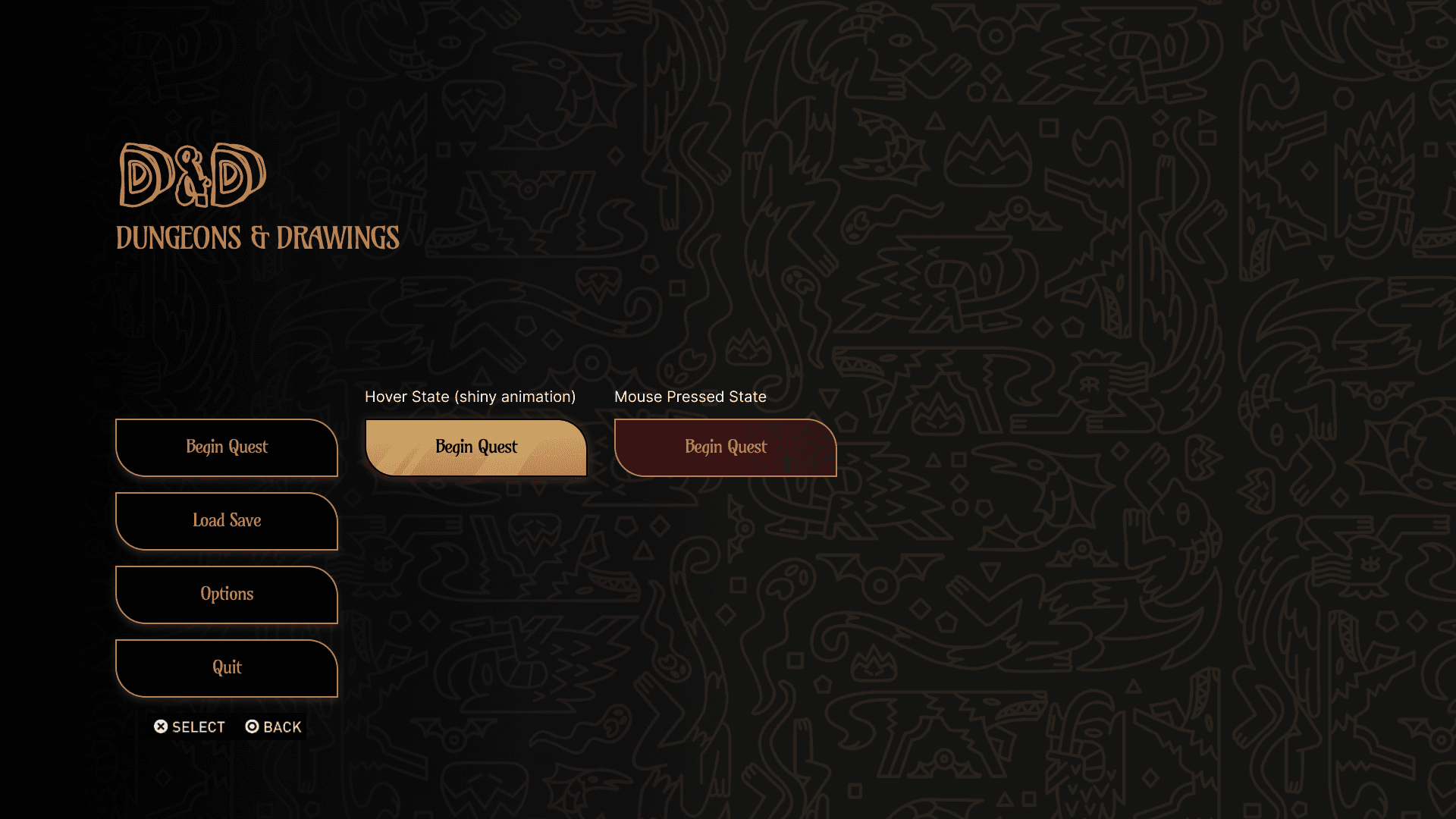
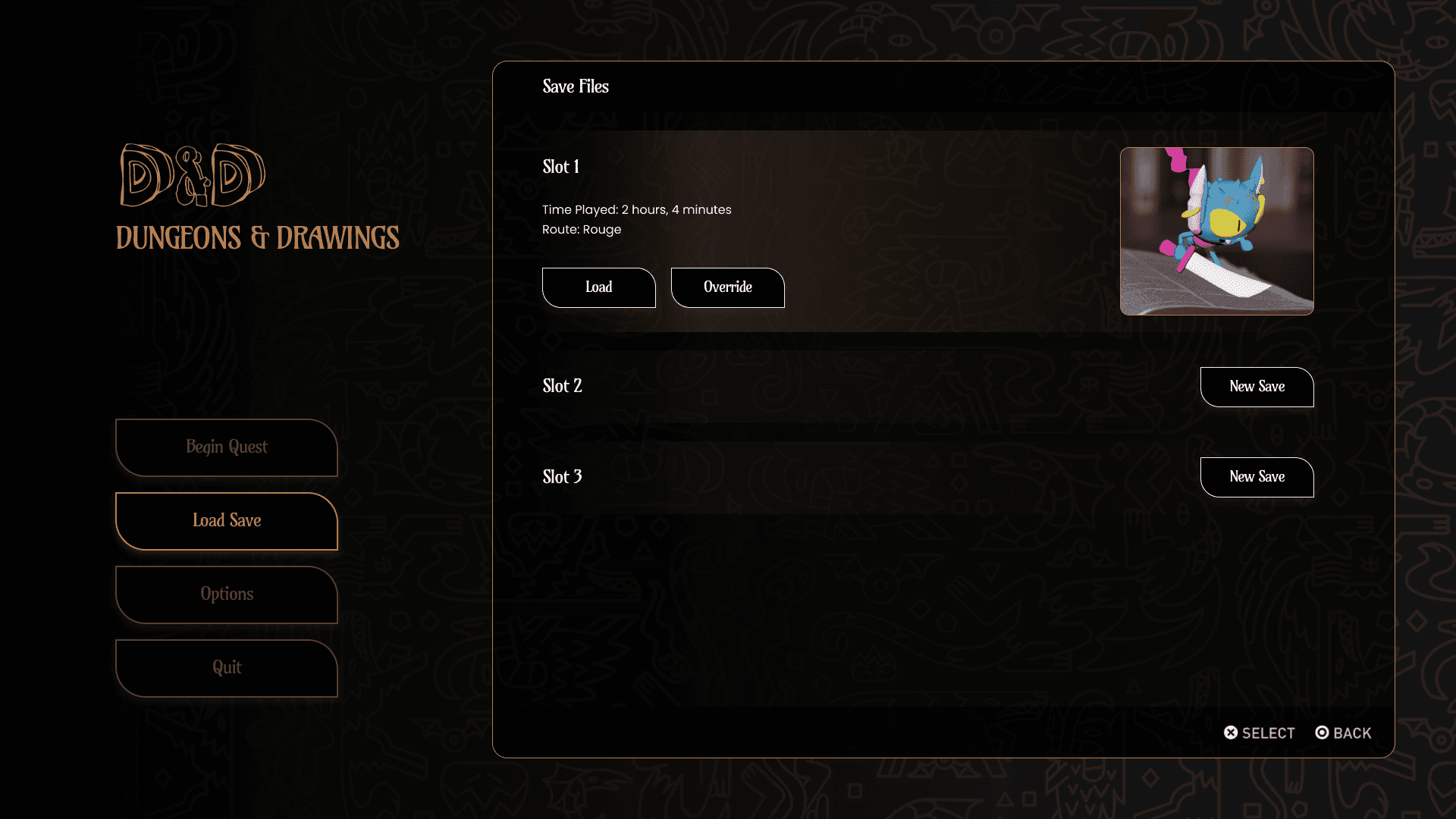
With a new direction for my research, the next step I needed to take was learn how to implement a simple, functional menu. I used Unreal Engine 5 because of its visual blueprints system, allowing me to add functionality without coding.
I kept track of this project through weekly journals, which detail my process further than what will be displayed here.
INITIAL PLANNING
The first step I took was to create mock-ups in Figma of what I wanted the menu system to look like.
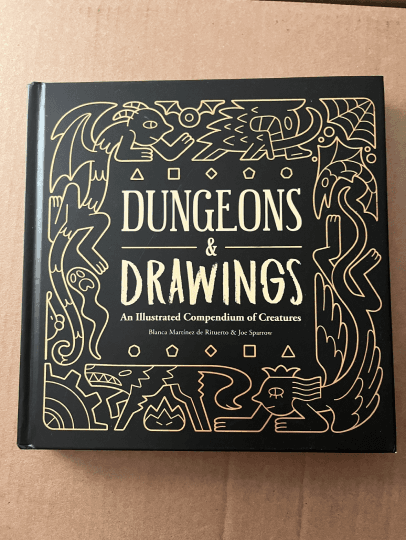
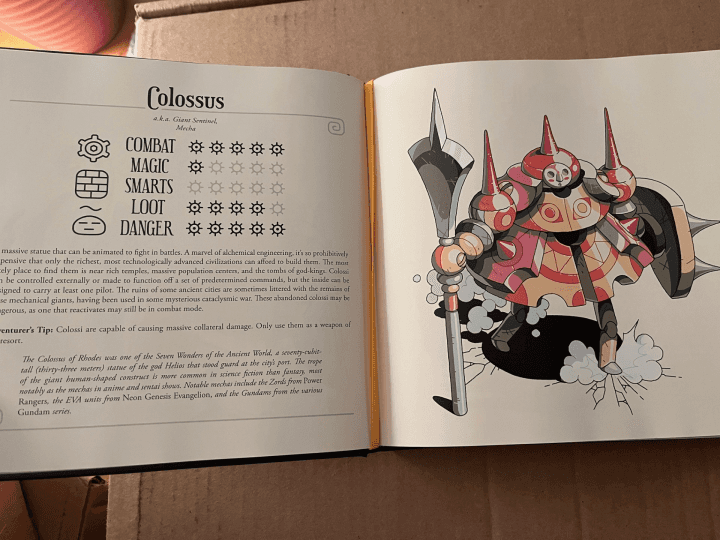
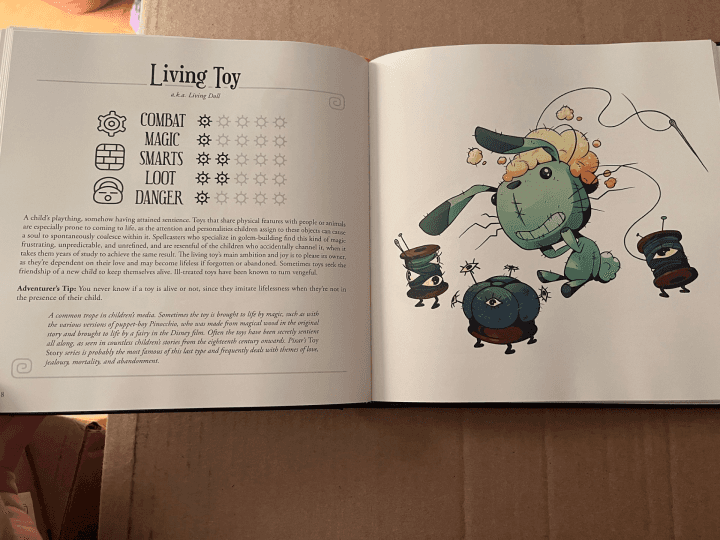
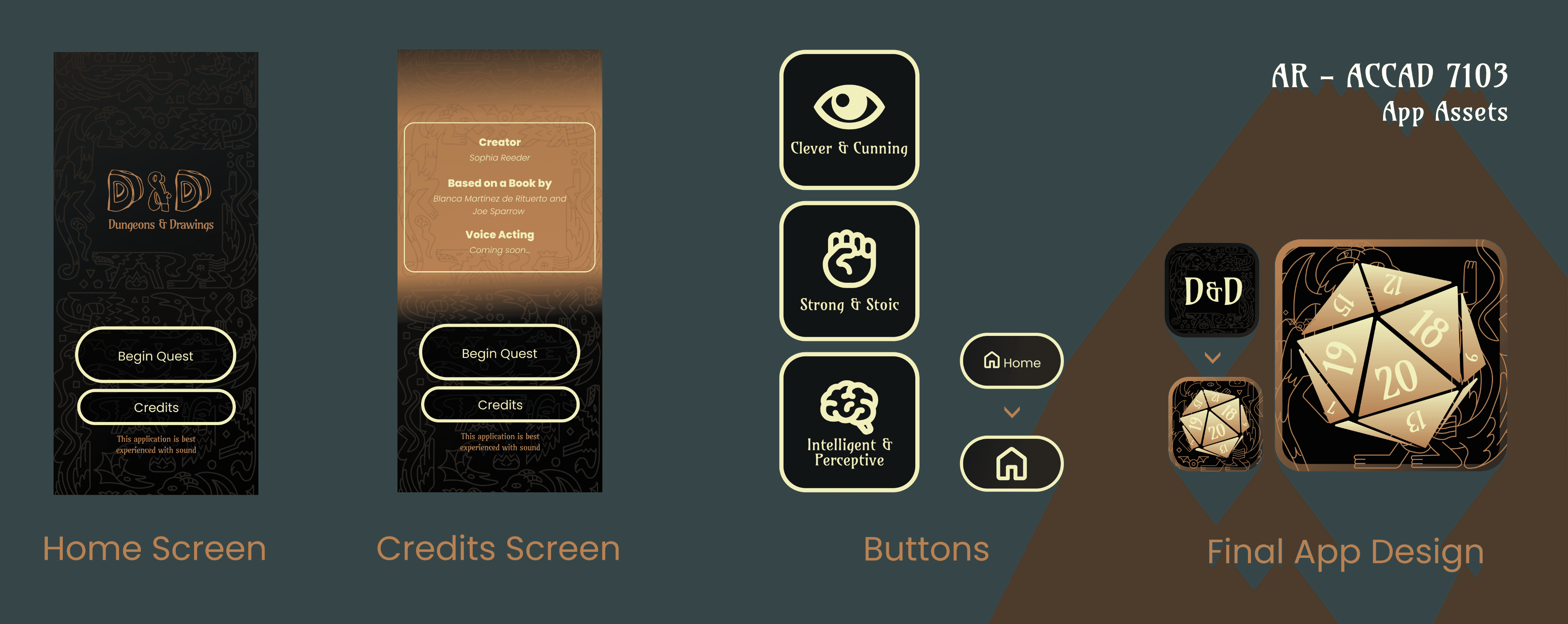
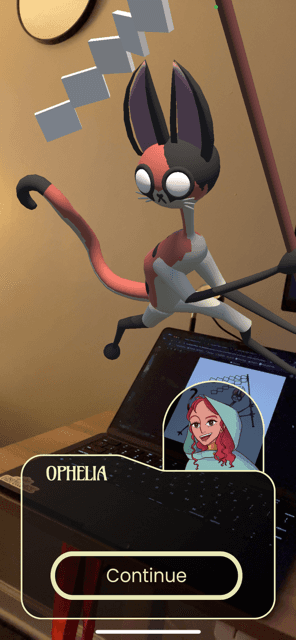
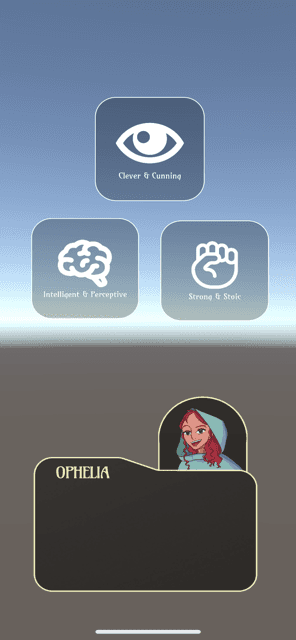
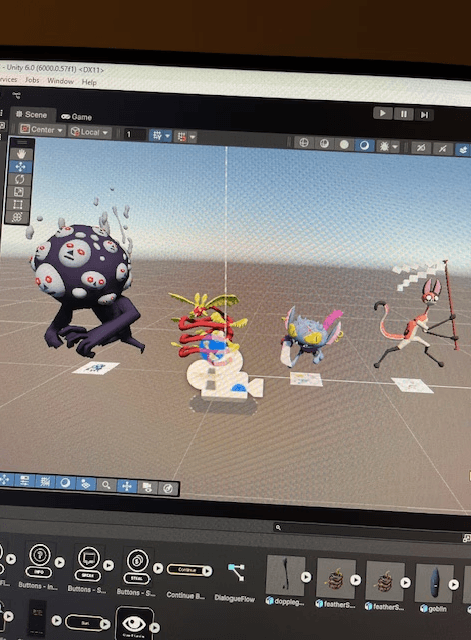
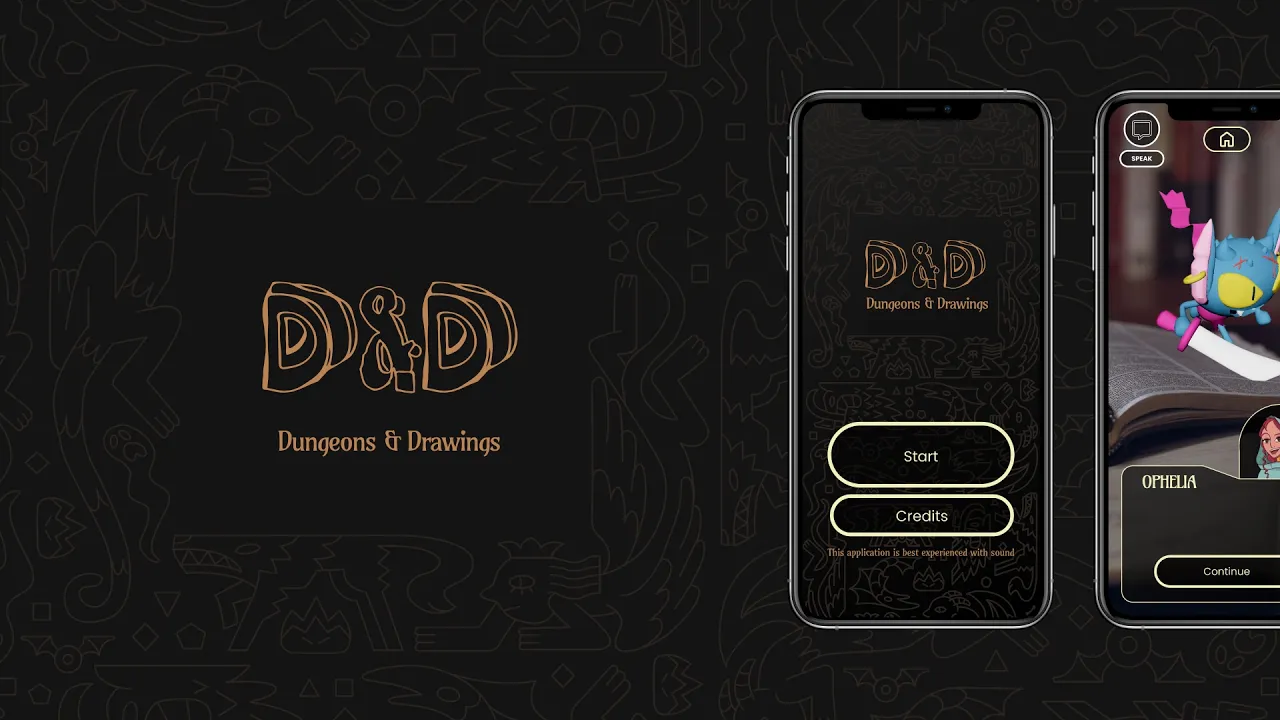
I decided to use the visual themes of my Dungeons and Drawings AR application as a way to transfer a mobile design over to PC, explore how I could improve a previous project, and lessen the pressure of having to come up with a completely new game to make a menu for.
All mock-ups were created in Figma.
RESULT
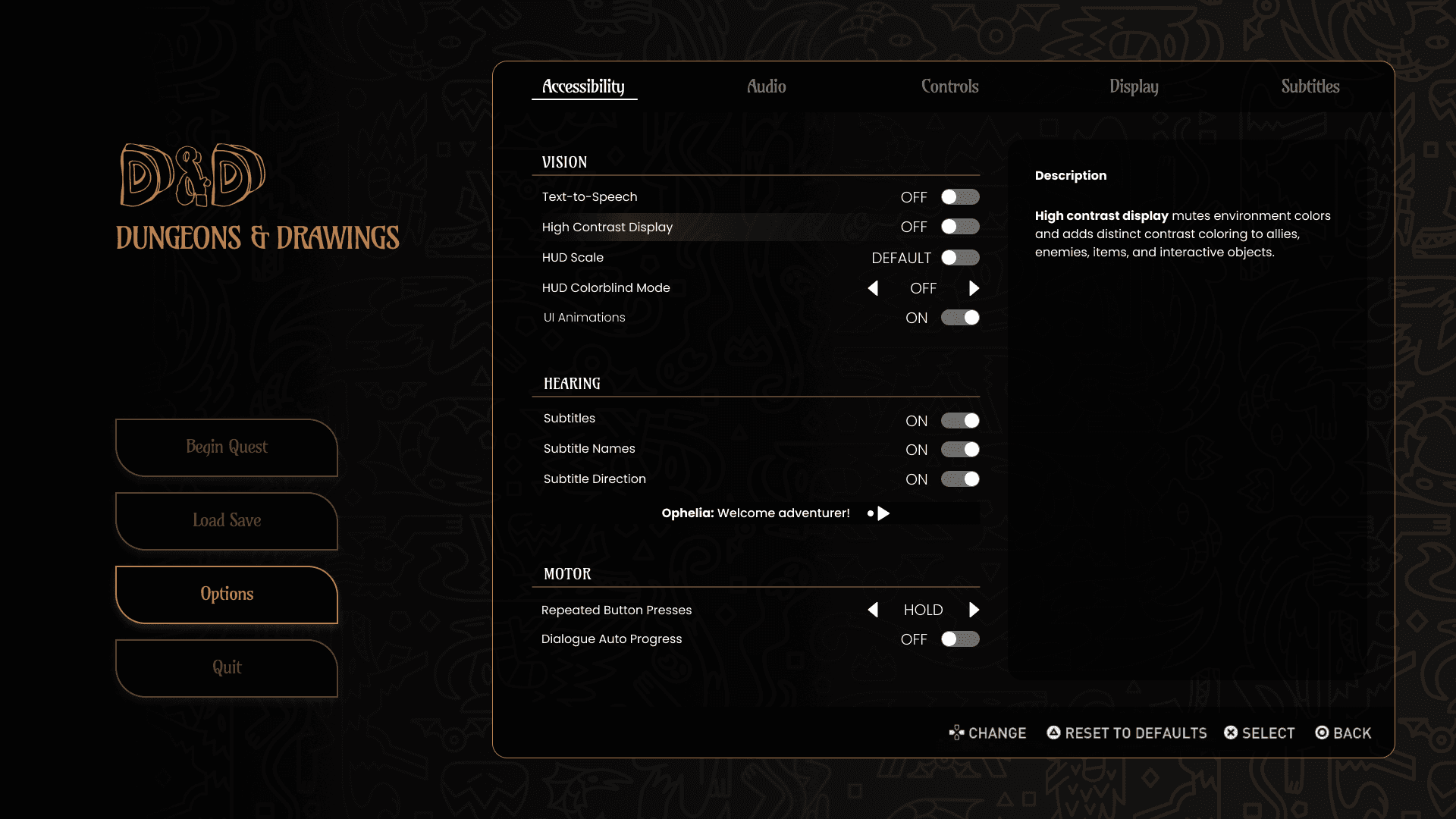
Through this project I was able to become more confident in creating responsive menus in UE5. I recreated my mock-ups, learned more about creating complex UI systems, and figured out what aspects I need to approach differently next time.
DESIGN REASONING
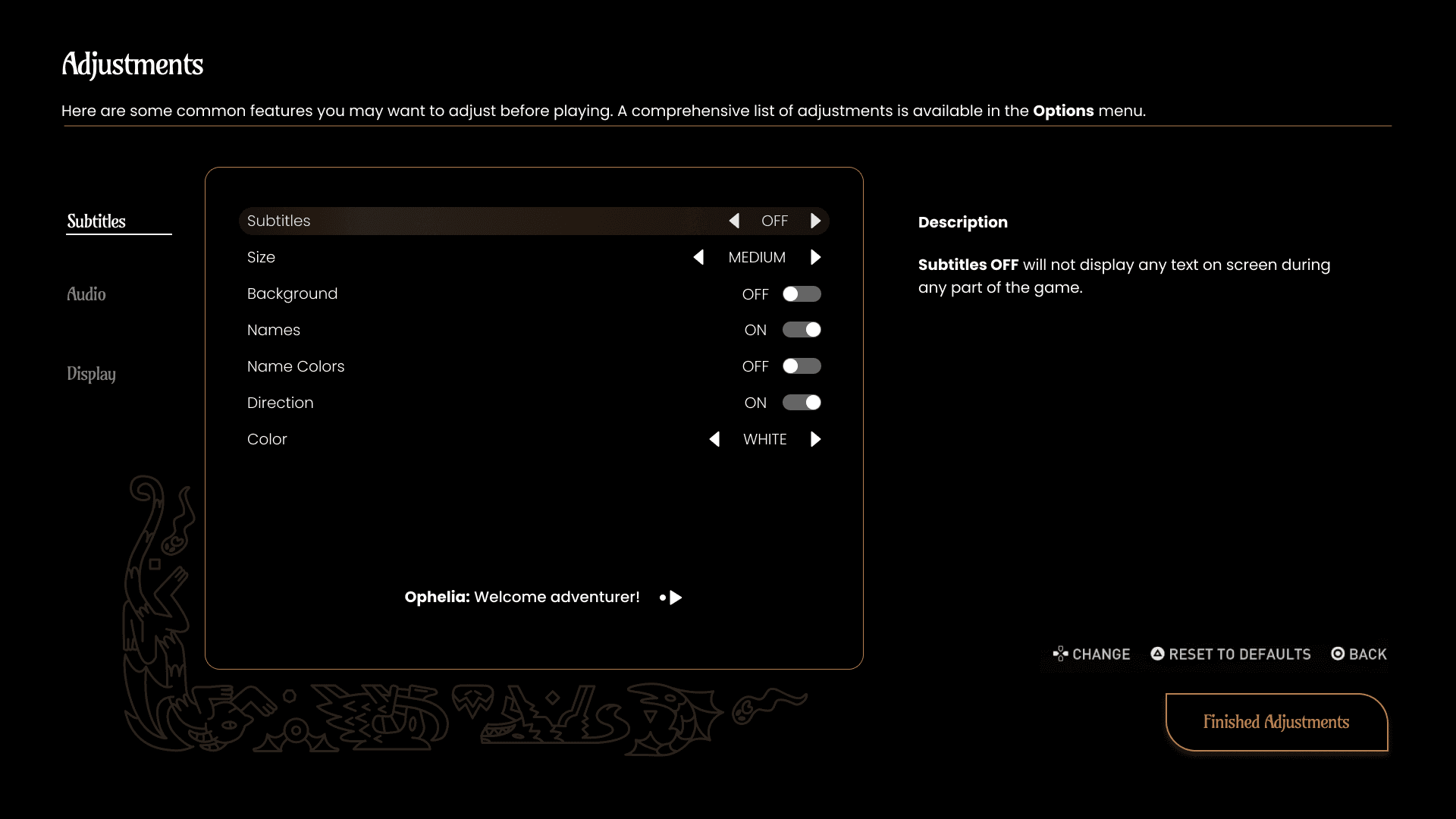
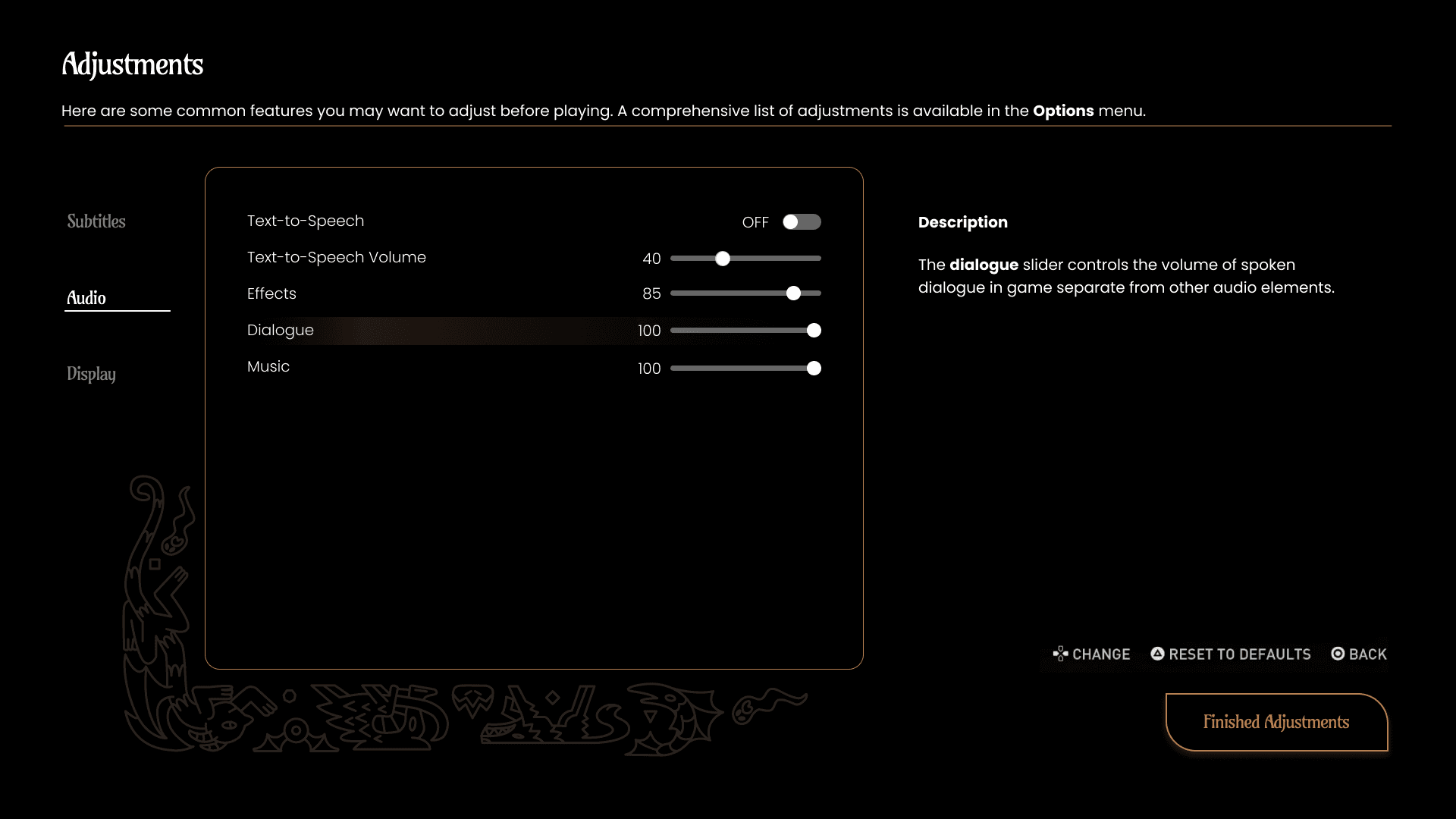
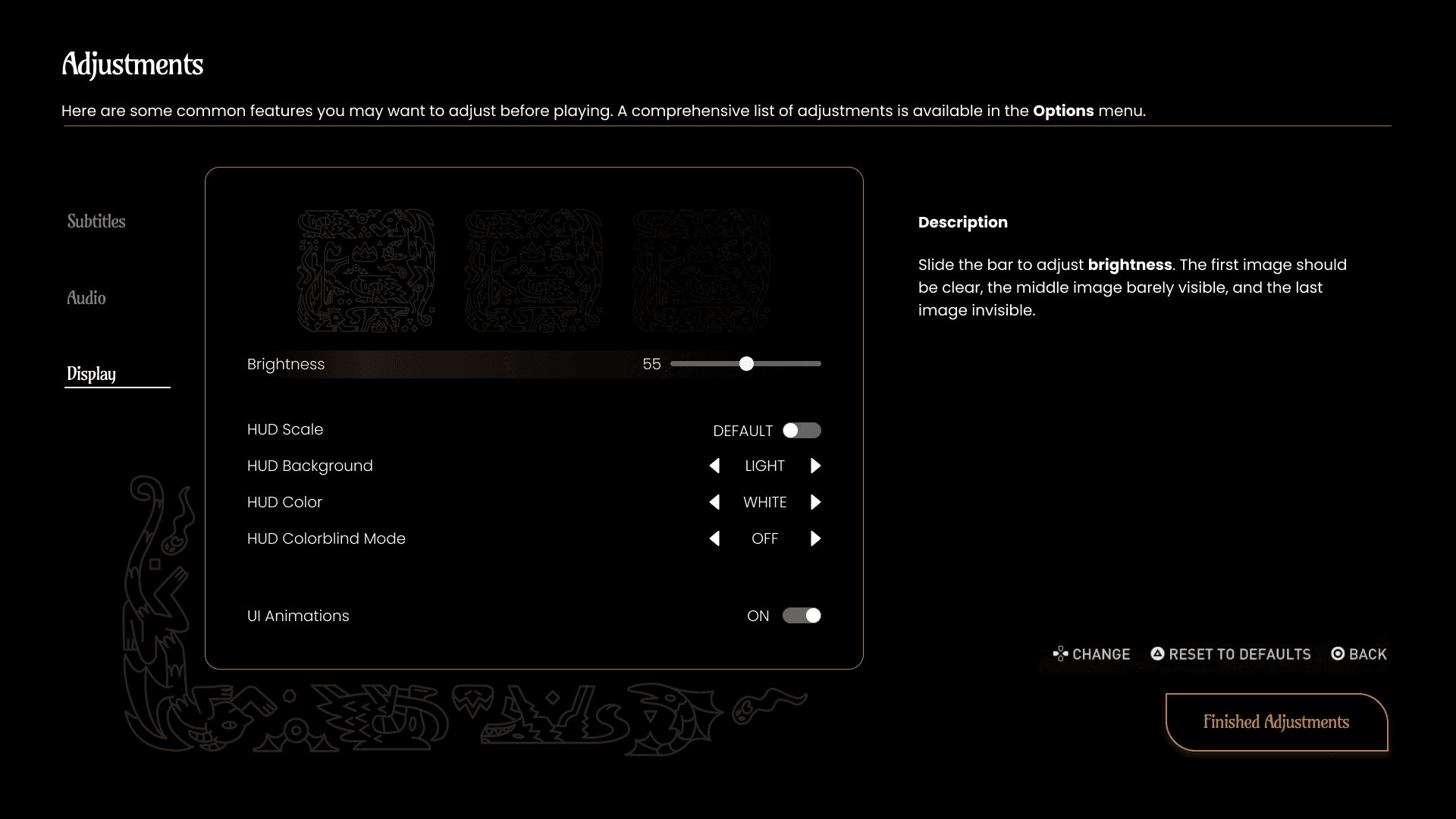
Many games offer the chance for players to alter settings before ever seeing the main start screen. The adjustments provided at the start were inspired by what the AR application's mechanics were. Since there was a lot of dialogue involved with the game, it made sense to let players adjust subtitles options right away.
The individual options were taken from the game, The Last of Us Part II, which has been widely praised for its accessibility features.
FUTURE
With this foundation, I want to now push myself beyond the stereotypical menu and think about UI's role in immersing the player during the game onboarding process.
ORIENTATION HANDBOOK
Problematizing
Research Orientation
Written Assignment
MY HANDBOOK OF X
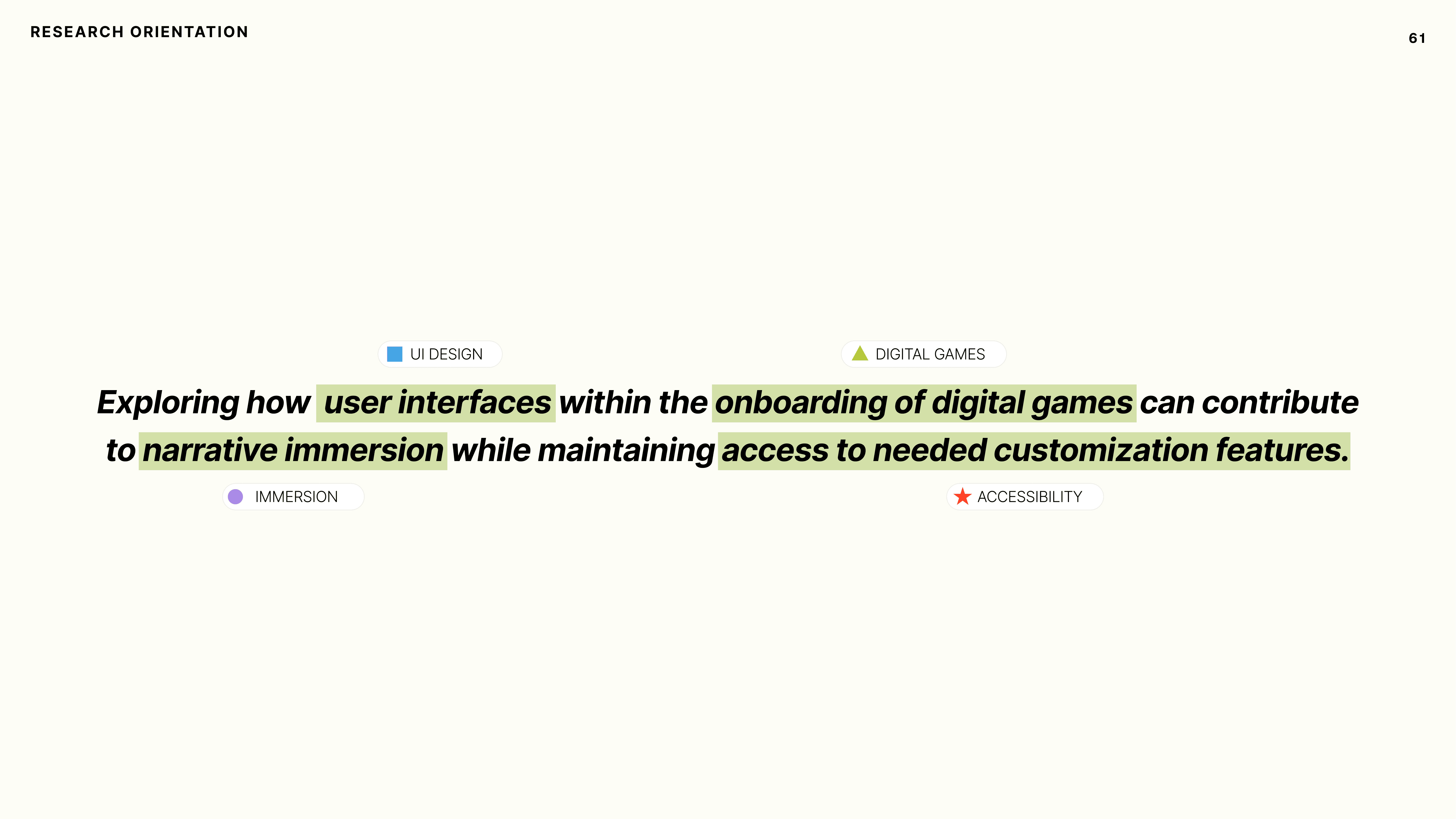
This semester, we were tasked with creating a handbook that would help flesh out and articulate our research orientation. I combined my interests in UI, immersion, and accessibility within the context of digital games.
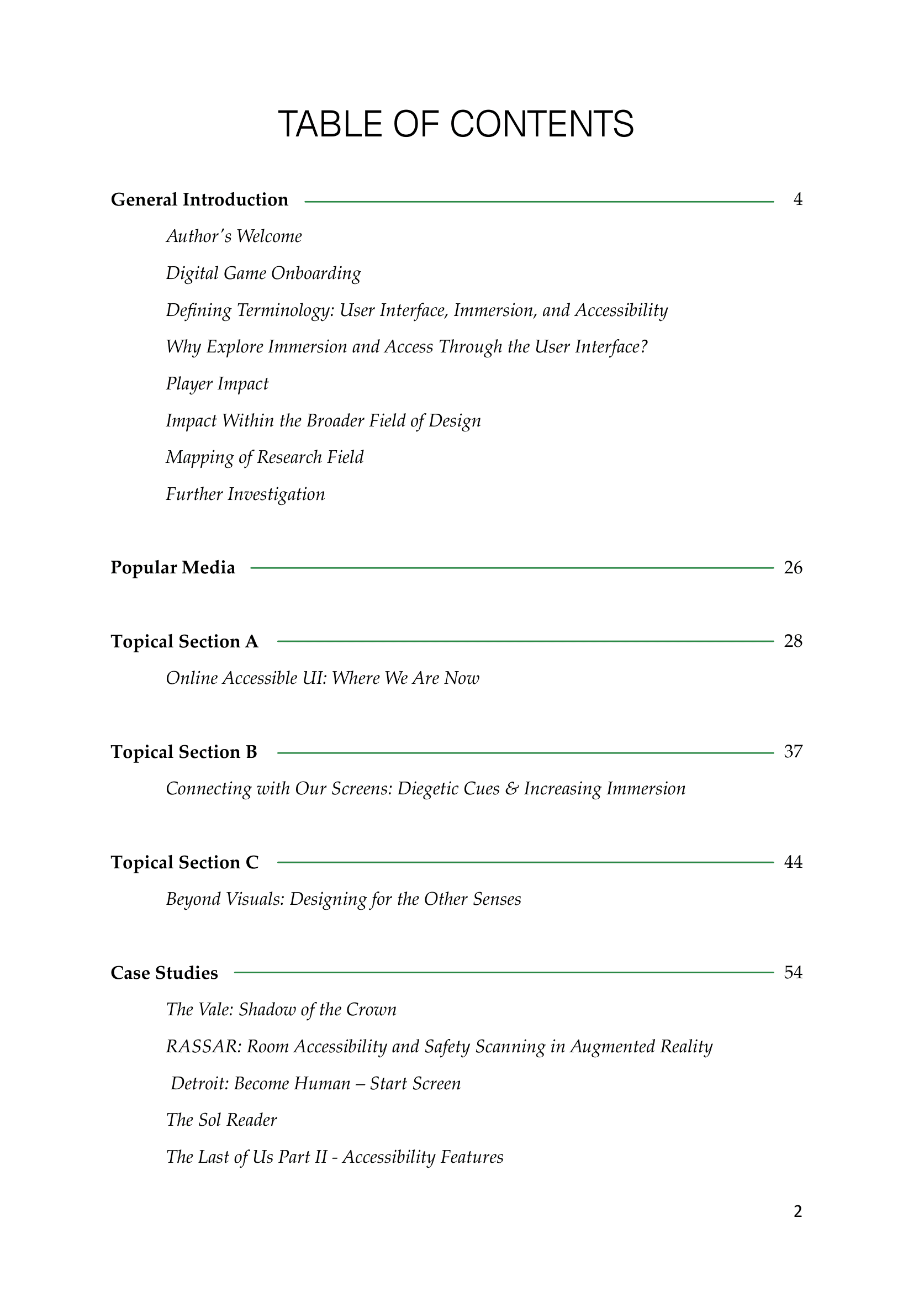
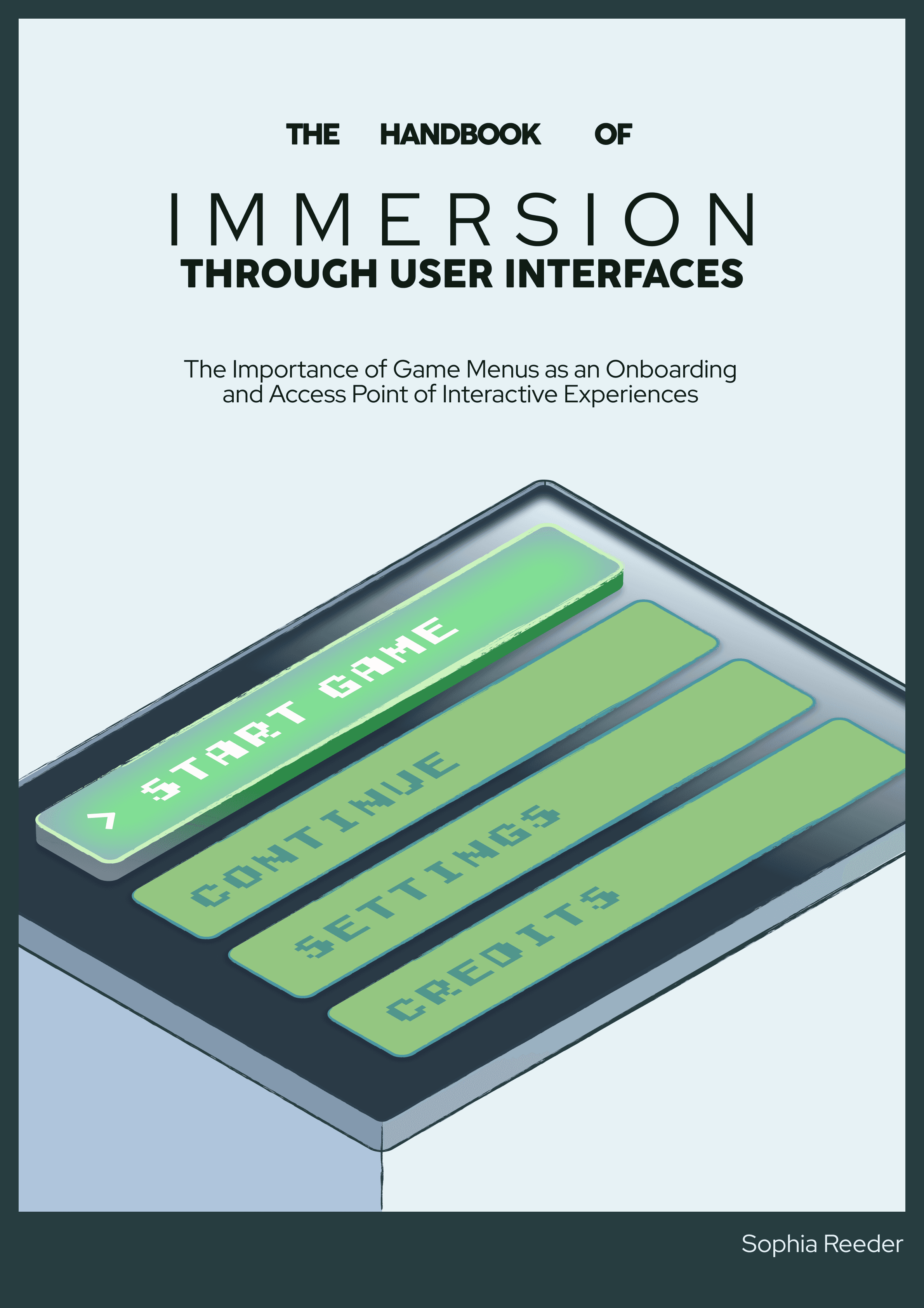
TITLE & TABLE OF CONTENTS
The Handbook of Immersion through User Interfaces: The importance of game menus as an onboarding and access point of interactive experiences
HYPERLINKS
PERSONAL WEBSITE
Figma
Framer
Professional Development
TECH SKILLS ASSIGNMENT
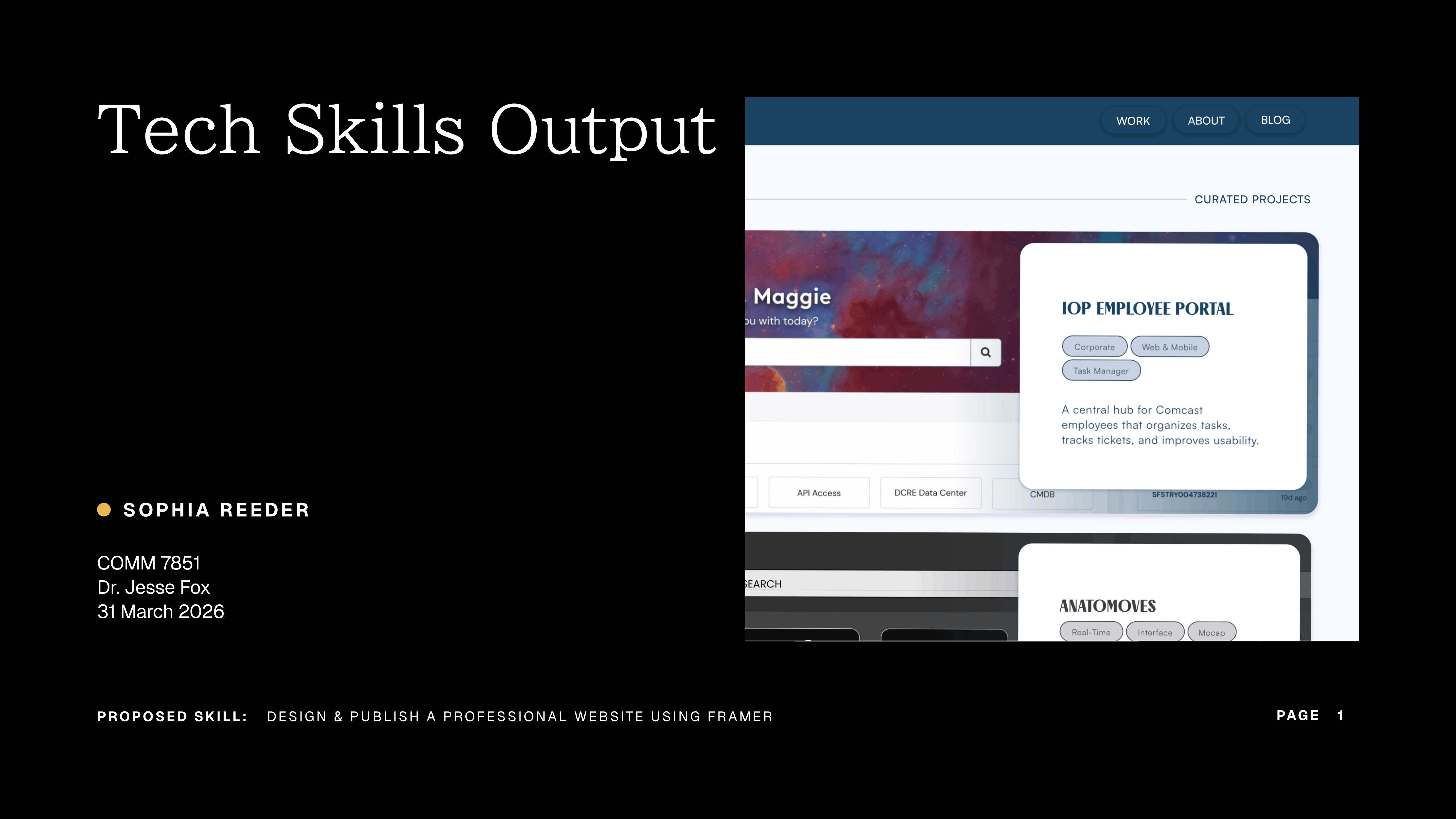
As a part of COMM 7851, an HCI and theory-centered course, I was tasked with learning a new tech skill that would benefit my studies or career.
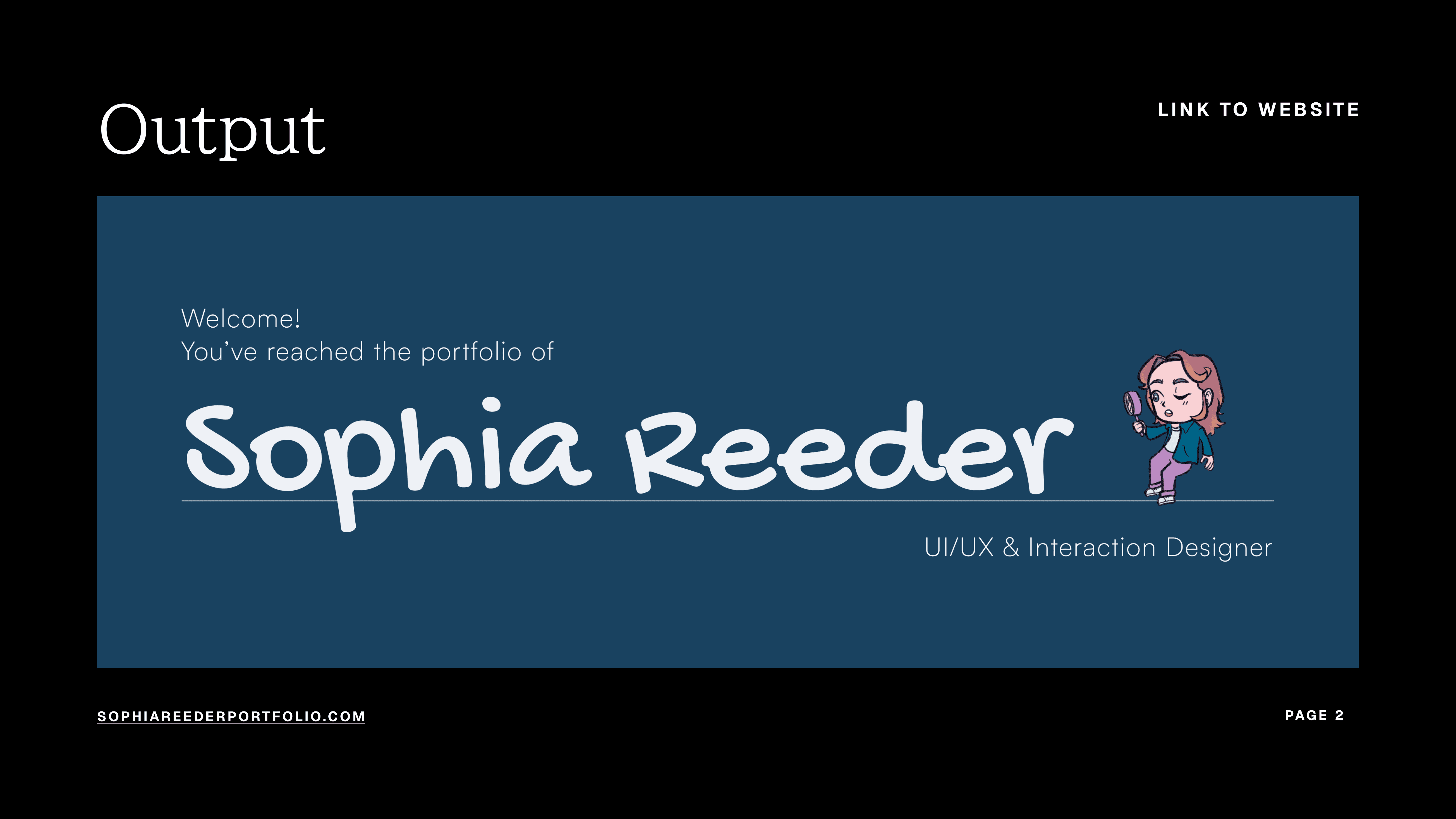
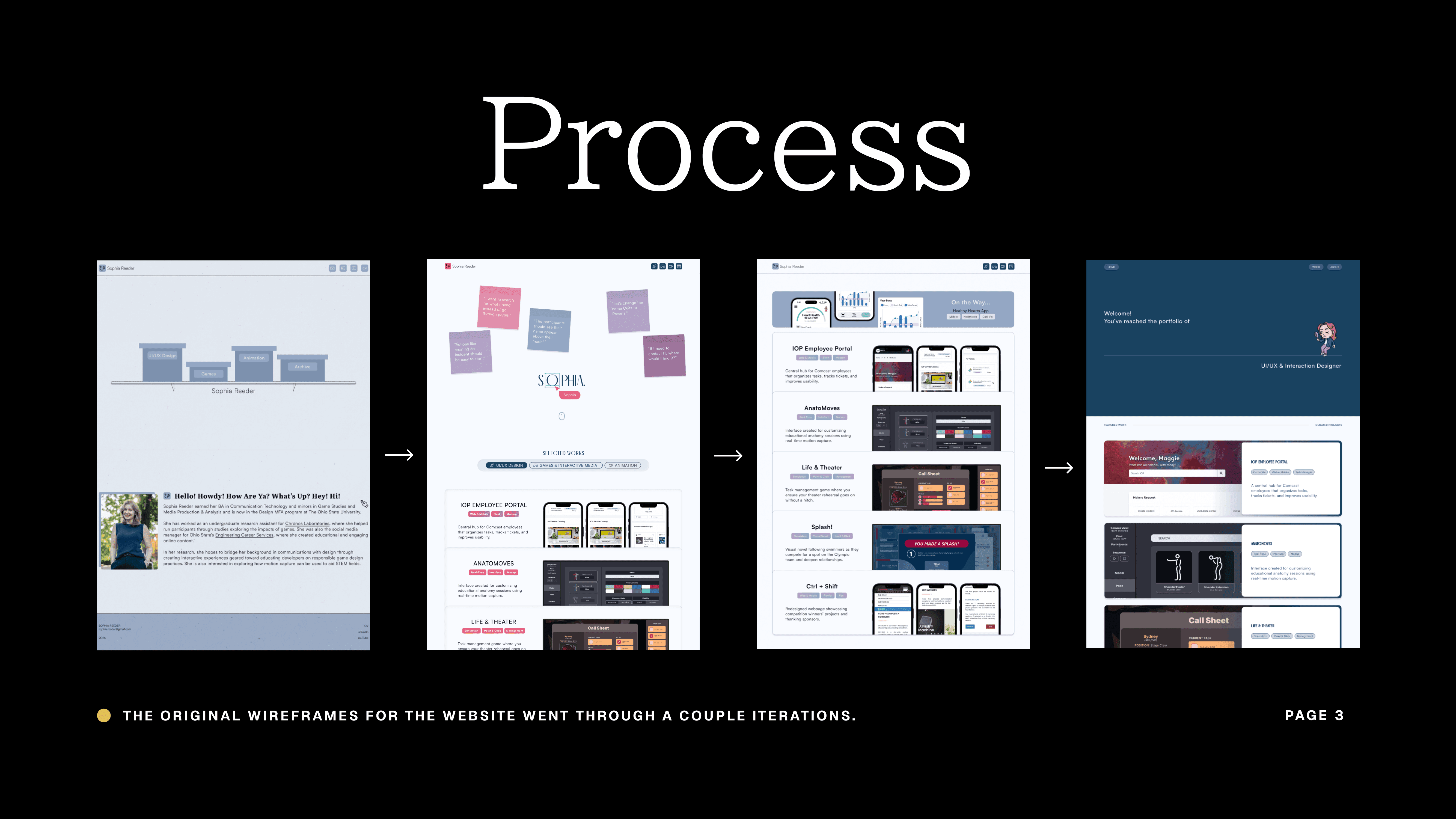
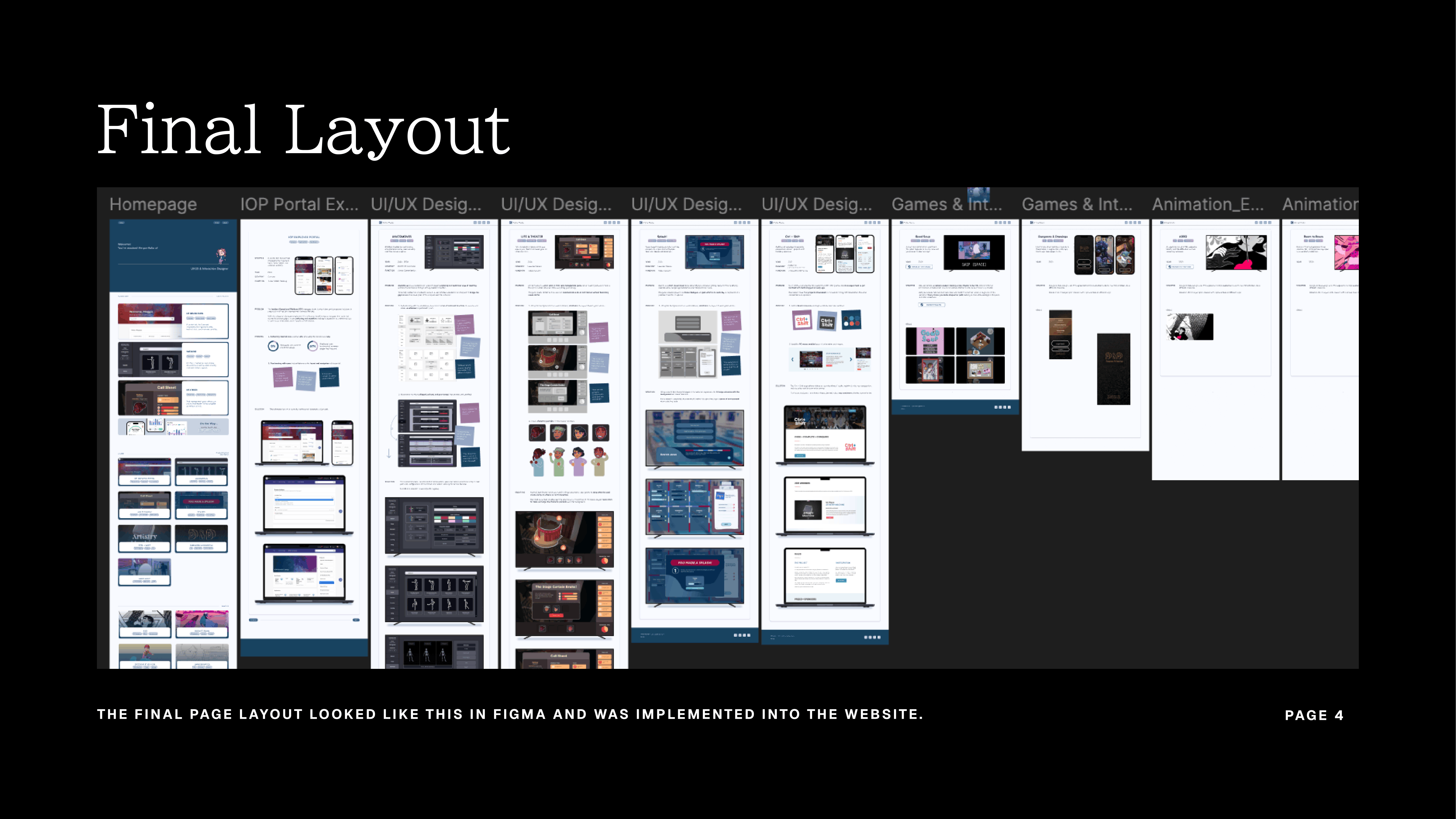
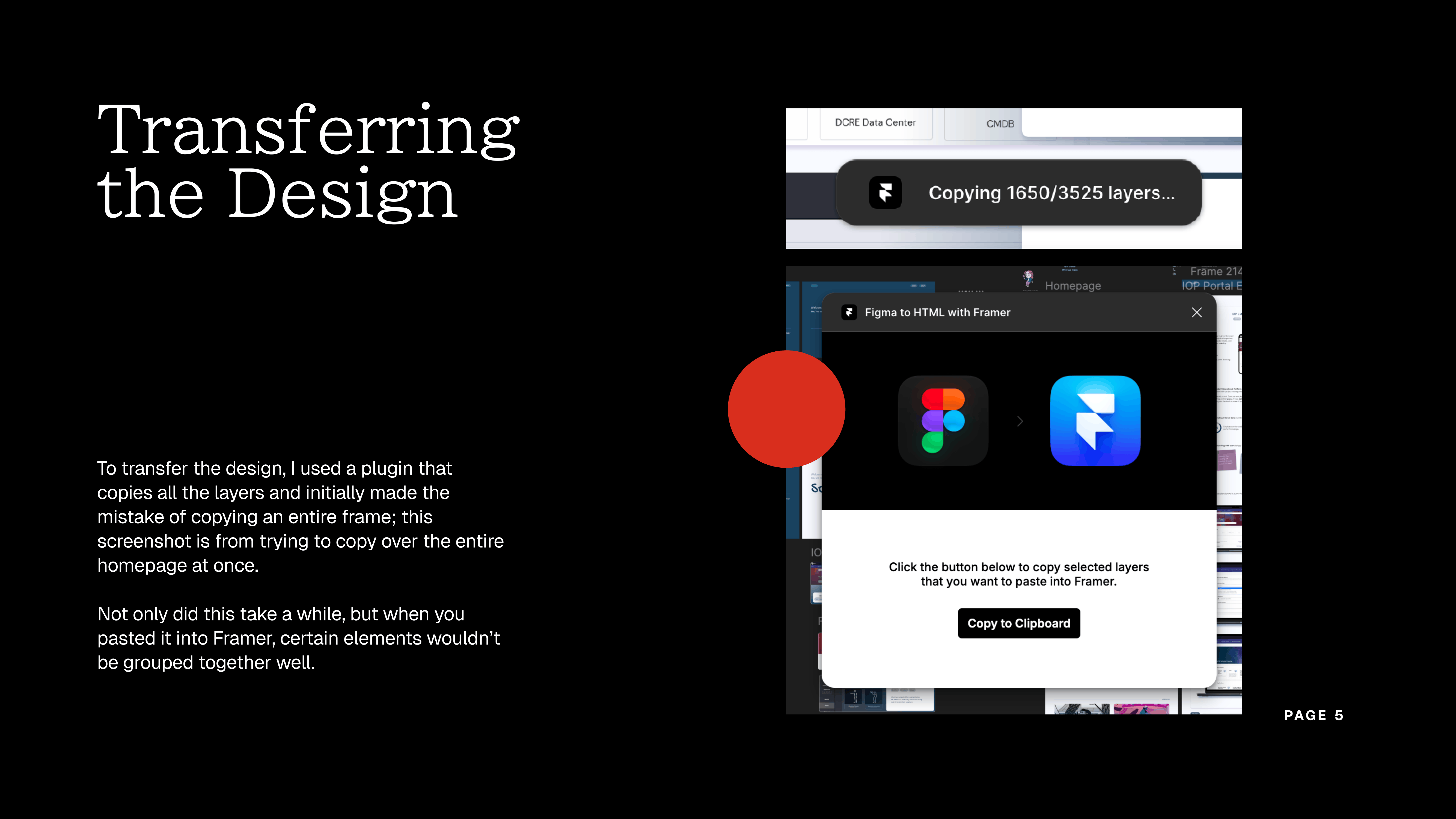
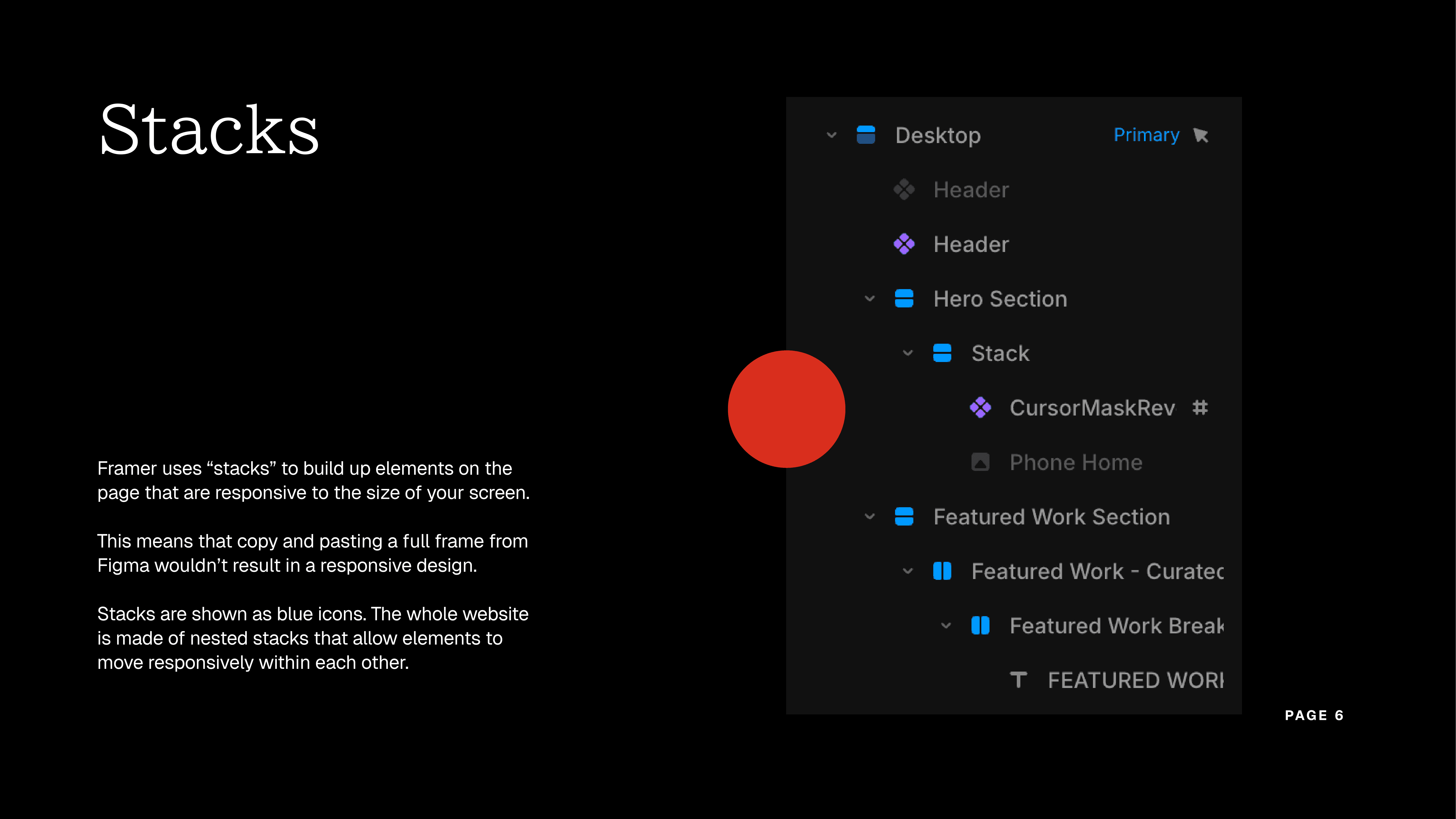
I took the time to finally purchase my own domain and create a website to house all of my work, including this portfolio!
PROJECT OUTCOME
I plan to keep updating this portfolio with work and projects. The goal is to sustain this website and continue improving it as I create more portfolio pieces.
ANATOMOVES
Real-Time
Interface
Mocap
PROJECT DESCRIPTION
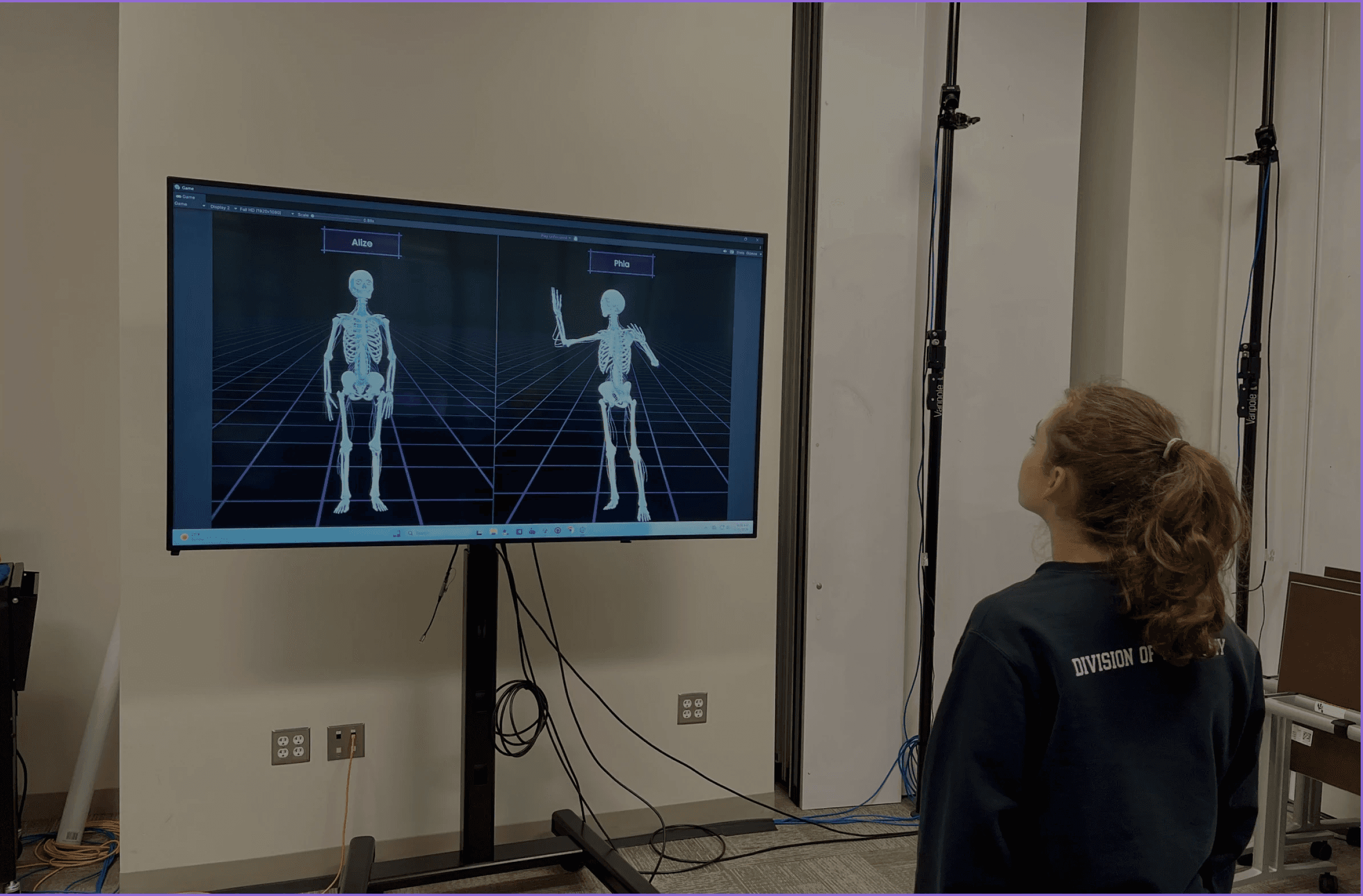
AnatoMoves is a a collaborative research project exploring innovative ways of teaching anatomy fundamentals through activity-based instruction.
To be fully realized as an educational tool, I was brought in to design a user interface to bridge the gap between developers of the program and non-technical instructors.
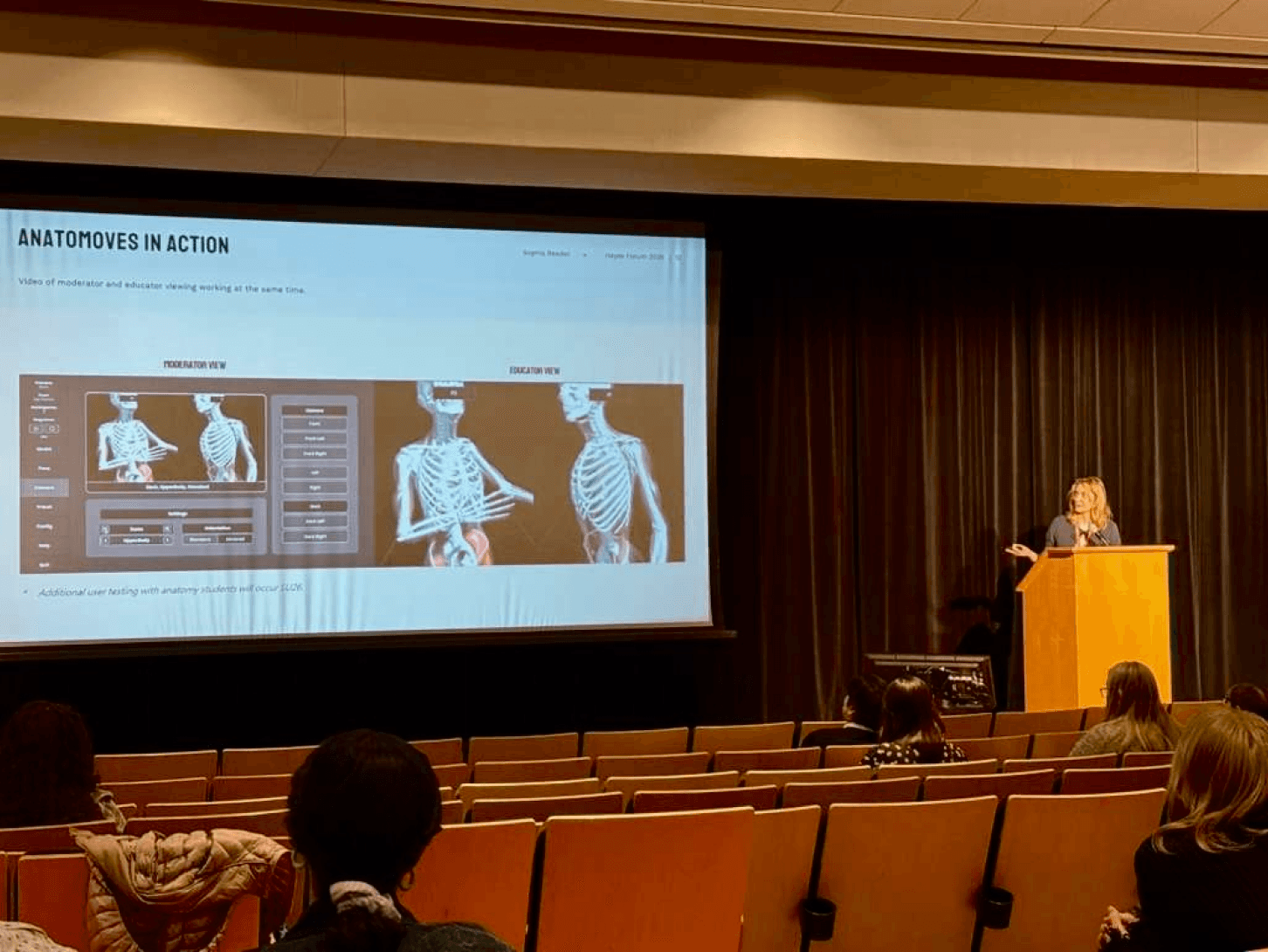
MODERATOR VS. EDUCATOR VIEWS
The moderator view houses all of the technical aspects of the interface and serves as the command center of the system.
The educator view, or the screen the participants and instructor are looking at, includes only information participants will need to see: The 3D model, a background to give a sense of space, and a name tag to differentiate who is who.
PURPOSE FOR INTERFACE
Support communication between the system's capabilities and users' affordances.
Allow non-technical backgrounds to feel confident using the software.
Account for future use in the classroom through real-time alterations to 3D visualization.
Separate the view of the 3D model from the UI for educator and students to focus on movement.
Assist developers in bug testing and allows greater flexibility during testing sessions.
PURPOSE FOR INTERFACE
Support communication between the system's capabilities and users' affordances.
Allow non-technical backgrounds to feel confident using the software.
Account for future use in the classroom through real-time alterations to 3D visualization.
Separate the view of the 3D model from the UI for educator and students to focus on movement.
Assist developers in bug testing and allows greater flexibility during testing sessions.
HAYES FORUM
AnatoMoves's interface was presented at Ohio State's 2026 Hayes Forum, which celebrates exceptional research done at the institution, and received an honorable mention.
GAME UI - Lavender studios
UI
Simulation Games
Point & Click
ROLE CALL
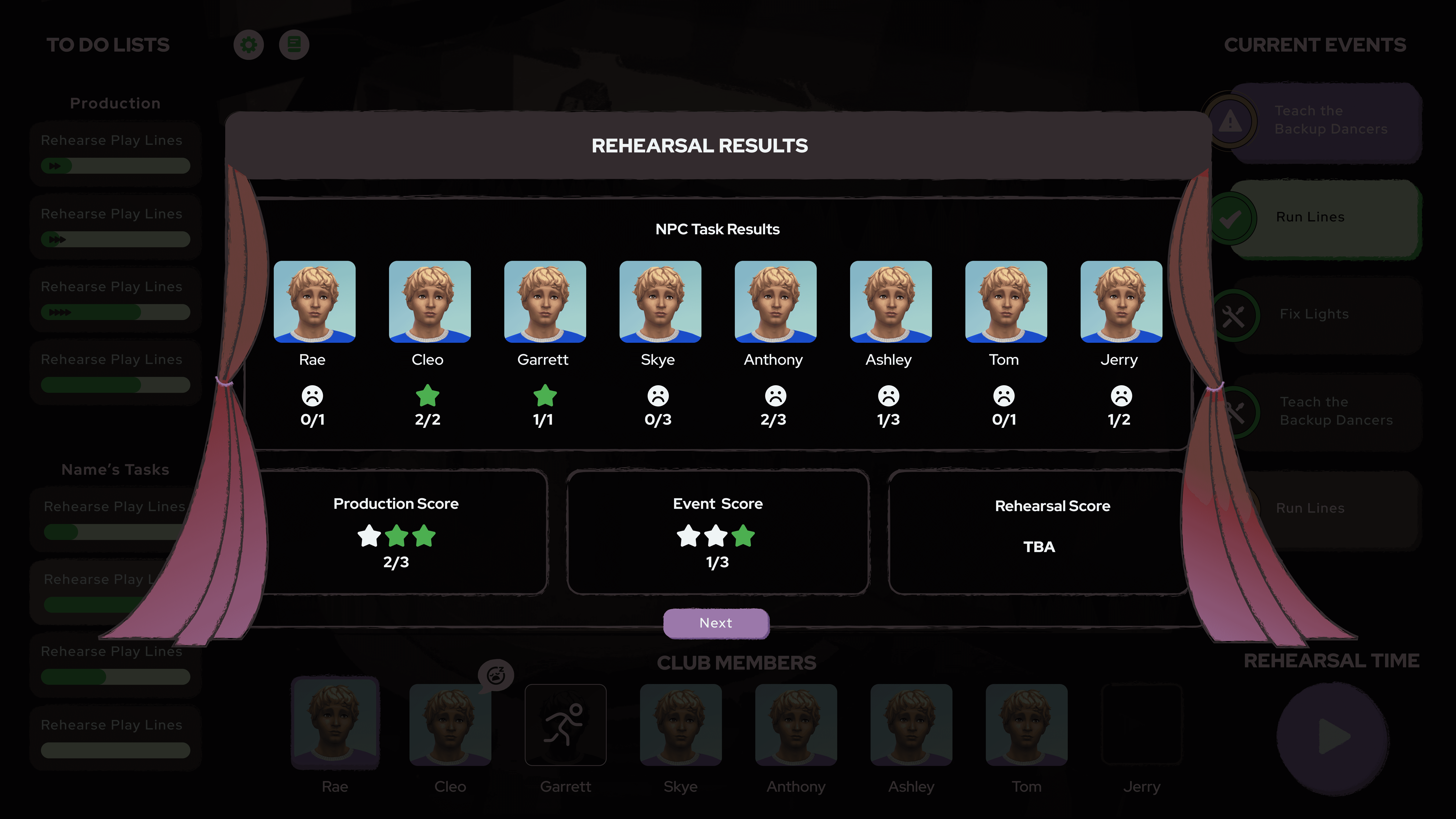
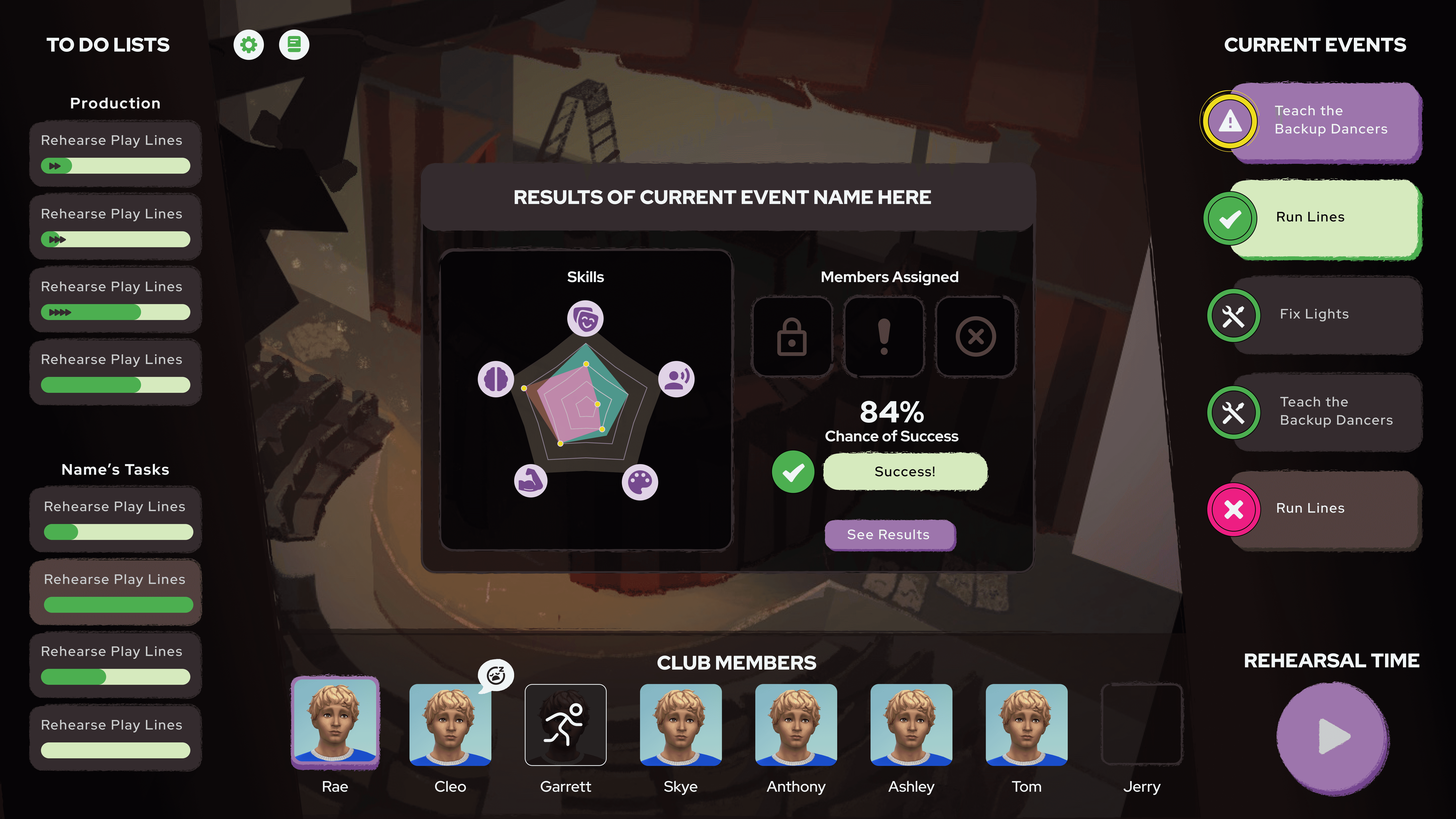
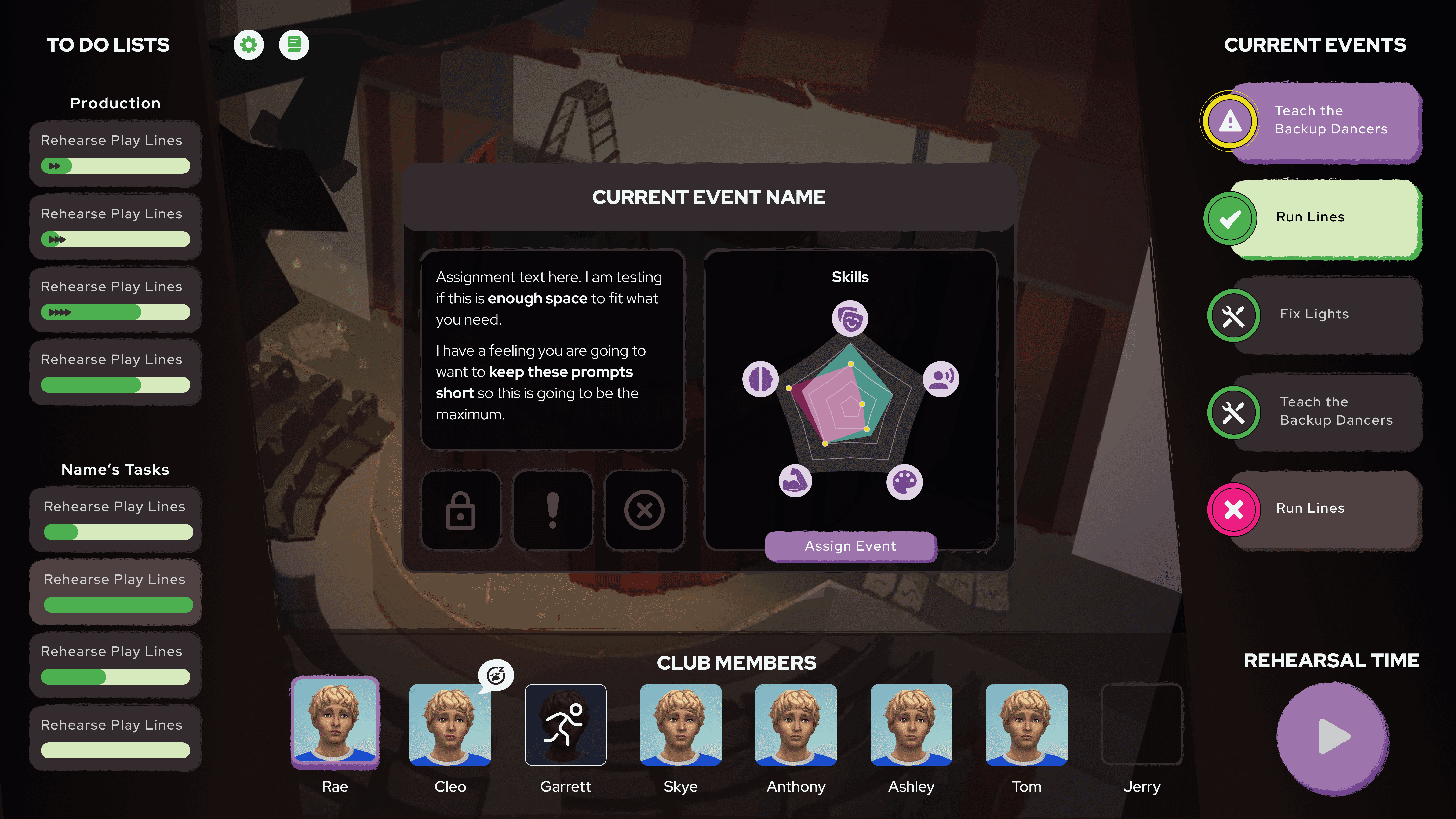
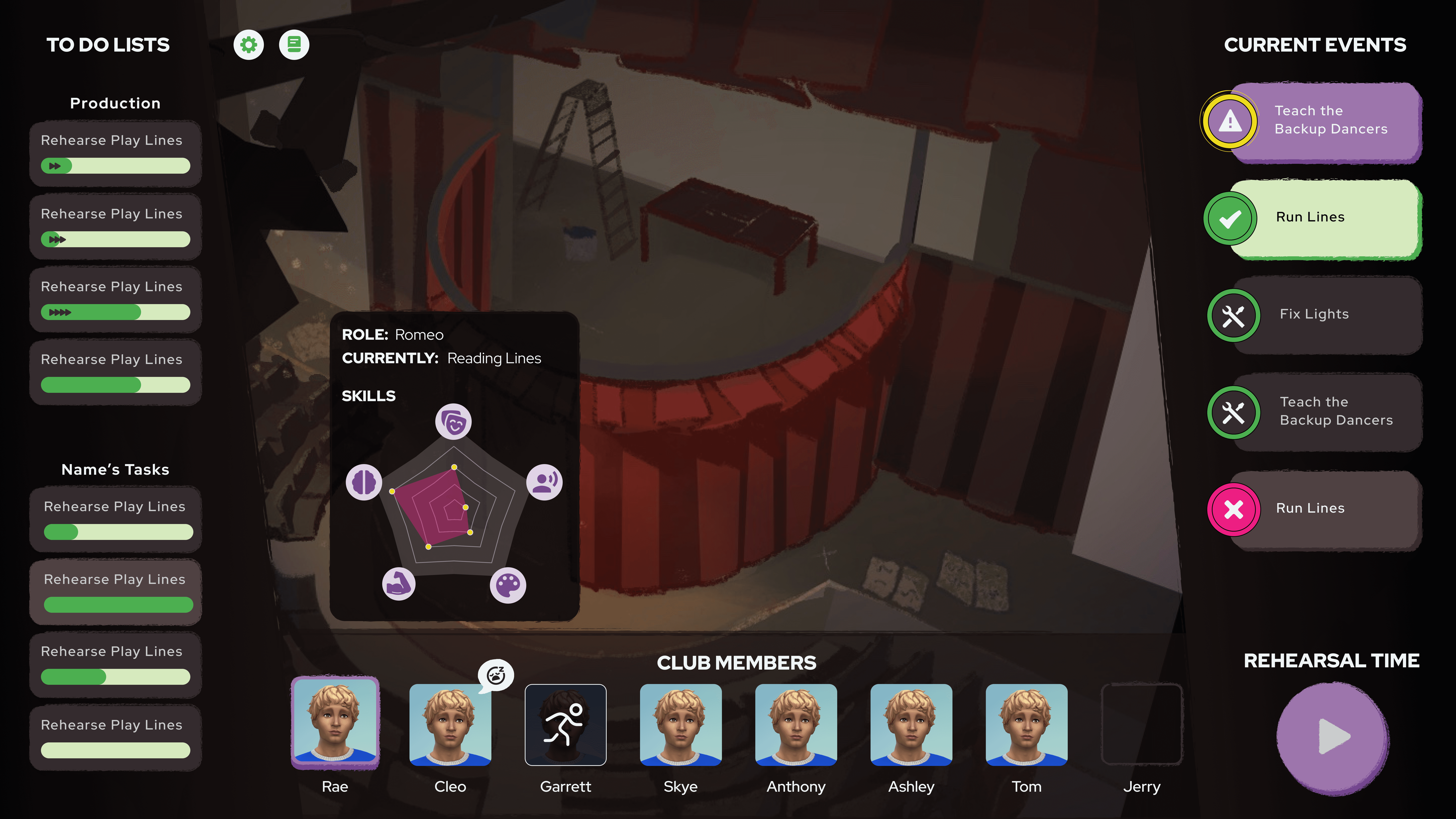
The original UI design for this game is showcased on it's own website page. This post will be showcasing a recent redesign for the game that was implemented for ACCAD Open House (2026).
REDESIGN
The newest version of the UI implements additional mechanics that were added to the game post-version 1, like the separation of to-do items into full-team production tasks, or individual tasks.
There is also a clearer color palette for current event states, and character information can be viewed by hovering over portraits.
HEALthy hearts app
Mobile
Health Care
Data Vis
PROJECT GOAL
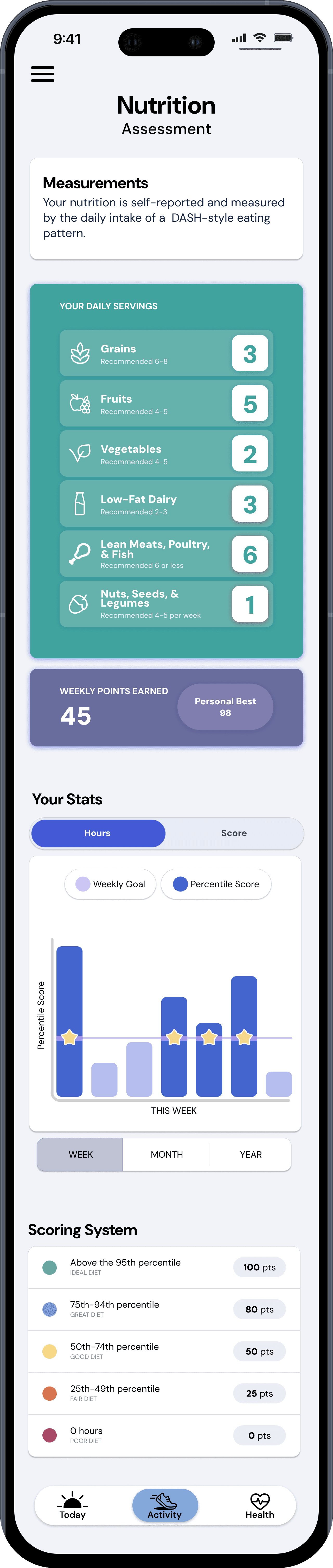
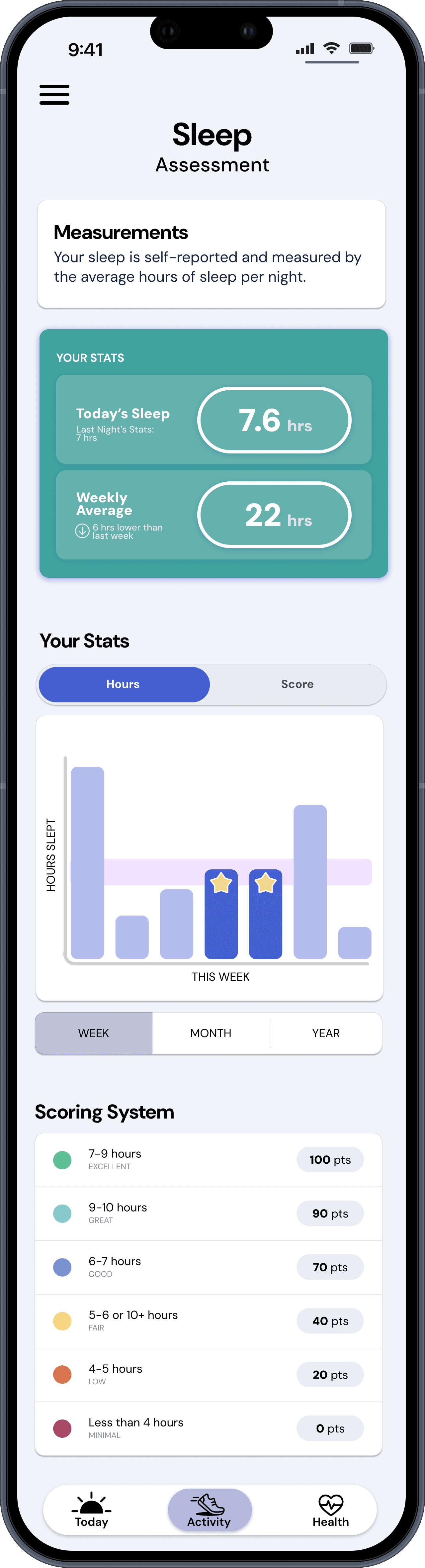
The Healthy Hearts app is a tracker to help cancer patients and survivors easily access personal health information.
The design and development process is currently still ongoing.
PREVIOUS
NEXT